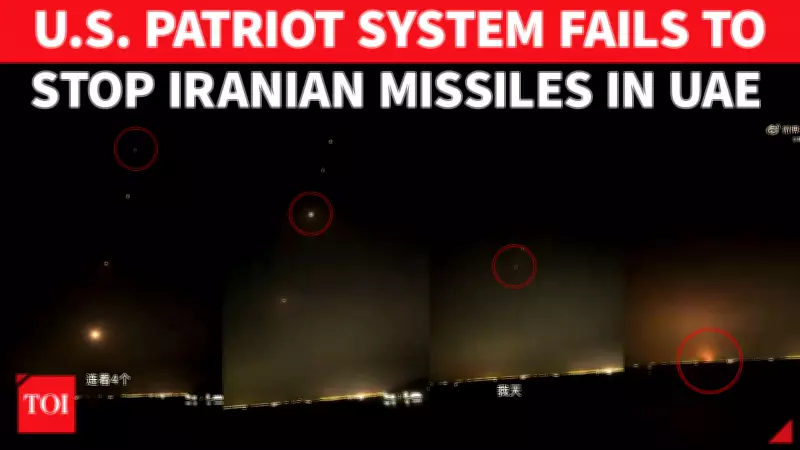
Patriot Defense Systems Fail to Intercept Iranian Missiles in UAE Oil Attack
Dramatic video footage from the Gulf of Oman has emerged, showing US-made Patriot air defense systems failing to intercept incoming Iranian ballistic missiles. The missiles targeted key oil infrastructure near Fujairah in the United Arab Emirates, striking their intended destinations despite multiple interceptor launches by the Patriot systems.
Questions About Advanced Defense Effectiveness
The incident raises serious and urgent questions about the operational effectiveness of one of America's most advanced and widely deployed air defense systems. The Patriot system, long touted as a cornerstone of missile defense for US allies, appeared unable to neutralize the threat in this high-stakes scenario.
Military analysts are examining the footage closely to determine whether the failure resulted from technical limitations, tactical deployment issues, or the advanced capabilities of the Iranian missiles. This event represents a significant test case for air defense technology in modern asymmetric warfare.

Escalating Tensions and Broader Implications
As tensions continue to escalate across the Middle East, this failure amplifies growing concerns about several critical issues:
- Air Defense Reliability: The reliability of expensive air defense systems when facing determined adversaries with sophisticated weaponry
- Economic Costs: The rising financial burden of maintaining and deploying advanced defense systems that may not perform as expected in combat situations
- Regional Conflict Risk: The increased potential for wider regional conflict when defense systems prove inadequate against missile attacks
The attack on UAE oil infrastructure represents more than just a military incident—it strikes at the heart of global energy security and regional stability. Fujairah serves as a critical oil export terminal, making its protection a matter of international economic significance.
Strategic Reassessment Required
This failure will likely prompt a strategic reassessment among US allies in the region who depend on Patriot systems for their national defense. Military planners may need to reconsider layered defense approaches, combining different systems and technologies to create more robust protection networks.
The incident also highlights the evolving nature of missile threats in the Middle East, where non-state actors and regional powers continue to develop more sophisticated delivery systems capable of challenging even the most advanced defensive technologies.
As investigations continue into why the Patriot interceptors missed their targets, the broader implications for regional security architecture and defense procurement policies will undoubtedly become subjects of intense debate among military strategists and policymakers worldwide.