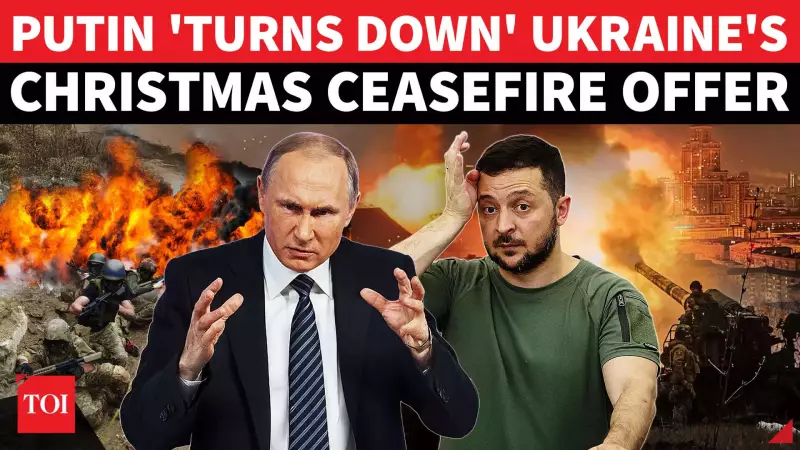
In a significant diplomatic development, Russian President Vladimir Putin has firmly rejected a proposed Christmas ceasefire from Ukrainian leader Volodymyr Zelensky. The Kremlin has stated it will not agree to any temporary pause in hostilities unless it is part of a comprehensive and binding peace agreement. This stance dashes hopes for a holiday respite in the ongoing conflict, now approaching another grim anniversary.
Kremlin's Firm Stance: No Truce Without a Deal
The Russian position, communicated on December 16, 2025, leaves little room for negotiation on a short-term truce. Moscow's message is clear: Russia will not give Ukraine a breather based on symbolic gestures or calendar dates. Officials argue that any cessation of fighting must be directly tied to a larger political settlement that addresses their stated security concerns. This hardline approach indicates that the Russian military command intends to maintain operational pressure through the winter period, despite international calls for humanitarian pauses.
Meanwhile, President Zelensky is pursuing a parallel strategy on the global legal stage. He has taken Ukraine's case to The Hague, intensifying efforts to hold Russia legally accountable for the crime of aggression. Kyiv's objectives are multifaceted, seeking not just a condemnation but also justice, reparations, and global accountability for the widespread destruction caused by the invasion. This legal offensive complements Ukraine's military defence, aiming to isolate Russia diplomatically and financially.

Ukraine's Legal Battle for Accountability
Ukraine's push at international forums represents a long-term strategy to cement Russia's status as a pariah state. By framing the conflict through the lens of international law and war crimes, Zelensky aims to solidify global support and create legal mechanisms for future reparations. This move to The Hague underscores a shift from purely battlefield narratives to a sustained campaign for legal and moral reckoning, which could have implications for years to come, regardless of the conflict's eventual military outcome.
A World Watching as Diplomacy Stalls
The rejection of the Christmas ceasefire offer highlights the current deadlock in diplomatic channels. With Moscow insisting on a grand bargain and Kyiv focused on legal accountability and restoration of its territorial integrity, the room for compromise appears vanishingly small. The international community watches anxiously as diplomatic pressure mounts and the war's future trajectory remains perilously uncertain. The situation presents a complex crisis where immediate humanitarian concerns clash with long-term geopolitical and legal strategies.
The key takeaways from this development are stark. First, the prospect of a peaceful holiday pause is effectively dead. Second, the war is increasingly being fought on two fronts: the physical battlefield and the courtrooms of international justice. Finally, the path to any negotiation appears exceedingly difficult, with both sides entrenched in positions that offer little immediate common ground. The world now braces for continued conflict through the winter, with the human and geopolitical costs continuing to rise.