

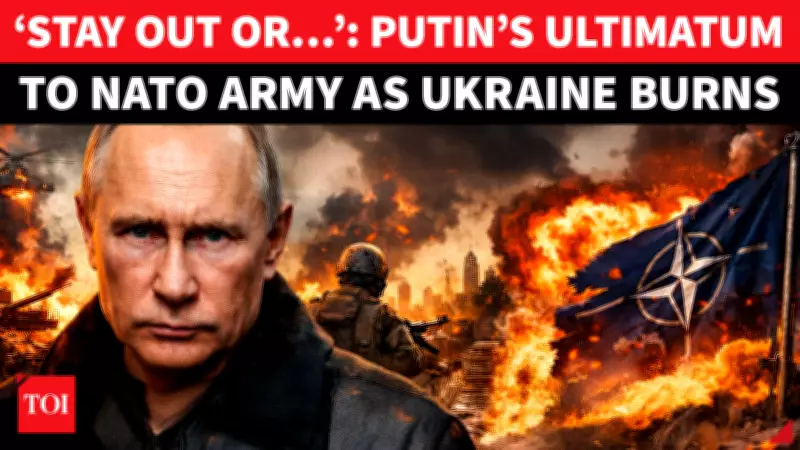
Russia's Stark Warning to NATO Over Ukraine Troop Deployment
In a chilling escalation of rhetoric, Russia has reiterated its stern warning to NATO against deploying coalition forces in war-torn Ukraine. The Russian foreign ministry has made it unequivocally clear that any such military presence would be treated as hostile, with spokesperson Maria Zakhrova declaring that NATO troops would be considered 'legitimate military targets' for Russian forces.
Putin's 'NATO Troops Mean War' Ultimatum to Europe
This latest threat comes as Russian President Vladimir Putin continues to assert his country's red lines in the ongoing conflict. The statement effectively translates to Putin's ominous warning that 'NATO troops mean war' for Russia, creating a dangerous standoff with European powers. The timing of this declaration is particularly significant as it coincides with renewed diplomatic efforts to negotiate a ceasefire between Russia and Ukraine.
NATO's Contingency Plans for Post-Ceasefire Ukraine
Earlier this week, NATO Secretary General Mark Rutte outlined the alliance's preparedness to deploy substantial military assets to Ukraine once a ceasefire agreement is reached. In his address to Ukraine's parliament on Tuesday, Rutte detailed that NATO would position 'troops on the ground, jets in the air, ships on the Black Sea' as part of stabilization efforts following any peace deal.

The Geopolitical Implications of Russia's Military Threat
This exchange of statements reveals the deepening geopolitical tensions surrounding the Ukraine conflict:
- Russia's position that NATO involvement constitutes direct military confrontation
- The alliance's commitment to securing Ukraine's sovereignty through potential troop deployment
- The delicate balance between ceasefire negotiations and military posturing
- Europe's precarious position as both mediator and potential combatant
Peace Talks Amidst Escalating Rhetoric
Despite the threatening language from Moscow, diplomatic channels remain open with peace talks continuing under challenging circumstances. The juxtaposition of negotiation tables and military threats creates a complex landscape where diplomatic progress must navigate around stark warnings of expanded conflict.
The international community watches anxiously as these developments unfold, recognizing that Russia's latest warning represents a significant escalation in rhetoric that could potentially derail fragile peace efforts. The situation remains fluid, with the specter of broader European involvement hanging over negotiations that could determine the future security architecture of the continent.






