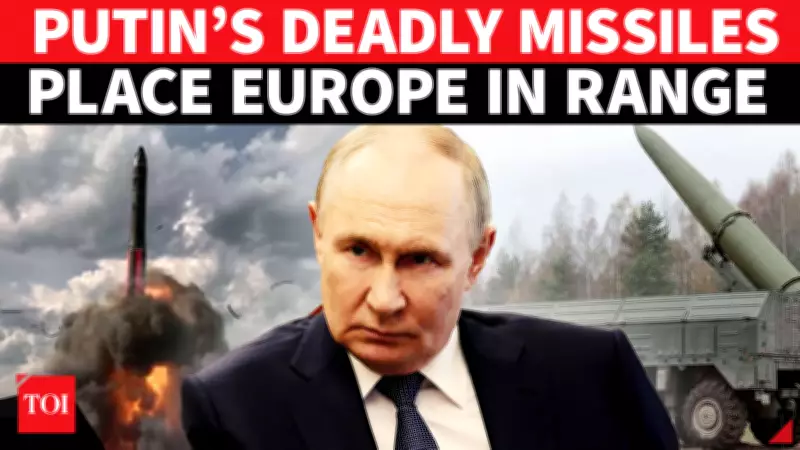
Russia has released dramatic footage showing Iskander-K nuclear-capable missile launchers moving through forests during massive strategic exercises with Belarus. According to Russian military reporting, the upgraded 9M729 cruise missile deployed with the system can reportedly strike targets up to 2,000 kilometres away — potentially placing several European capitals within reach. The large-scale drills involve tens of thousands of troops, submarines, aircraft and missile launchers as tensions with NATO and the West remain deeply strained over Ukraine and European security.
The exercises come amid heightened geopolitical friction, with NATO closely monitoring Russian military movements near its borders. The Iskander-K system, known for its mobility and precision, is capable of carrying nuclear warheads, adding a significant deterrent factor to the drills. Military analysts suggest that the 2,000-kilometre range of the 9M729 missile could threaten cities such as Berlin, Paris, and London, escalating concerns among European allies.
Strategic Drills and Regional Tensions
The joint Russia-Belarus exercises involve over 60,000 troops, alongside submarines, strategic bombers, and multiple missile systems. These drills are part of a broader pattern of increased military activity by Russia near NATO's eastern flank. The deployment of nuclear-capable assets has drawn sharp criticism from Western leaders, who view it as a provocative move that undermines European security.

Russia, however, maintains that the exercises are defensive in nature and aimed at ensuring the security of the Union State of Russia and Belarus. The Russian Defense Ministry stated that the drills are designed to test the readiness of forces in a simulated conflict scenario. Despite these assurances, NATO has condemned the actions and called for de-escalation.
Reactions and Implications
Western officials have expressed alarm over the footage, which they say demonstrates Russia's willingness to use nuclear threats as a tool of coercion. The United States and its allies have reiterated their commitment to defending NATO territory under Article 5 of the alliance's treaty. Meanwhile, Belarus has faced increasing pressure for its role in hosting Russian forces and allowing the deployment of advanced missile systems on its soil.
The situation remains tense as diplomatic channels struggle to find a resolution. The drills are expected to continue for several more weeks, with both sides engaging in rhetorical and military posturing. The international community watches closely as the risk of miscalculation looms large.