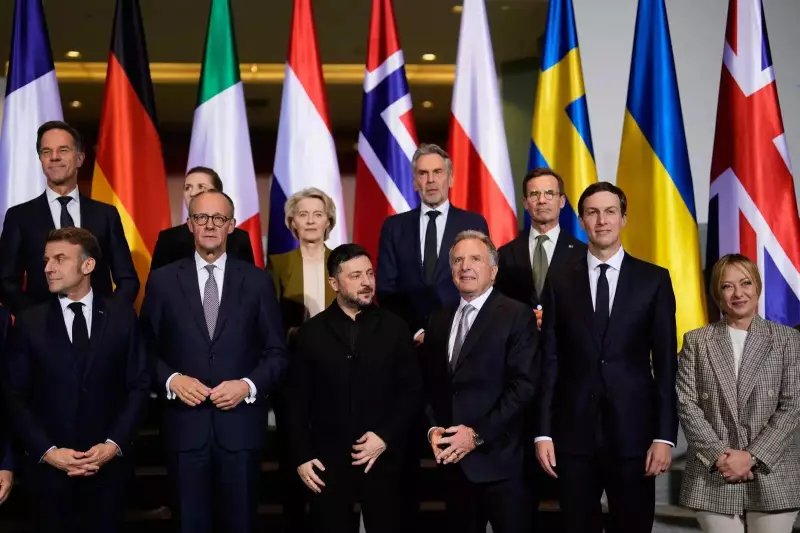
In a significant development that could reshape the path to ending the war, Russia has indicated it is open to Ukraine joining the European Union as part of a potential peace agreement, senior US officials disclosed on Monday. This revelation came after a crucial round of diplomatic talks in Berlin involving US envoys and European leaders.
Major Concession from Moscow in Berlin Talks
The US officials, who spoke on the condition of anonymity, briefed reporters following meetings where American envoys Steve Witkoff and Jared Kushner met with Ukrainian President Volodymyr Zelensky. They also held discussions with British, French, and German officials in Berlin over the past two days. The officials described Russia's potential acceptance of Ukrainian EU membership as a major concession by Moscow, marking a shift in its previously stated positions.
While Russia has previously stated it does not object to Ukraine's EU aspirations, its explicit inclusion as part of a peace deal framework is seen as a new and critical element. The US has reportedly agreed to provide Kyiv with security guarantees reminiscent of NATO's Article 5 mutual defence clause as part of this proposed deal. However, US officials cautioned that such an offer will not be on the table "forever," urging a swift resolution.

Details of the Proposed Agreement and Ukrainian Stance
"The basis of that agreement is basically to have really, really strong guarantees — Article 5 like — also very, very strong deterrence through weapons," one US official explained anonymously. This suggests a formal security pact for Ukraine outside of NATO membership.
However, the potential deal comes with significant conditions for Kyiv. An official familiar with the matter stated that US negotiators told Ukraine it must agree to withdraw its forces from the eastern Donetsk region. This latest round of talks concluded on Monday as Kyiv faces mounting pressure from Washington to swiftly accept the US-brokered peace framework.
Despite the pressure, Ukraine's lead negotiator, Rustem Umerov, struck a positive note, stating that "real progress" had been achieved during the Berlin discussions. The US side echoed this sentiment in a social media post on Steve Witkoff's account after Sunday's meeting, declaring that "a lot of progress was made."
Kremlin's Response and the Road Ahead
Reacting to the developments, the Kremlin stated on Monday that it expected to be updated on the Berlin talks by the American side. When asked if the negotiations could conclude by Christmas, Kremlin spokesperson Dmitry Peskov described predicting a timeframe as a "thankless task." He reiterated Moscow's position, stating, "President Putin is open to peace. He is not open to any tricks aimed at stalling for time."
The talks represent a delicate balancing act, with the US attempting to mediate a complex settlement. The proposed pillars—Ukrainian neutrality regarding NATO, security guarantees from the West, potential EU membership, and territorial concessions—outline a fragile framework for ending the prolonged conflict. The world now watches to see if this diplomatic momentum can translate into a lasting peace agreement.