In a move laden with political symbolism, Russian authorities have officially reopened the Donetsk Academic Drama Theater in the city of Mariupol. This is the same building that became the grim epicenter of one of the deadliest single attacks on civilians since Russia launched its full-scale invasion of Ukraine.
A Symbol of Tragedy Reborn
The theater, located in the heart of Mariupol, was serving as a major civilian air raid shelter in March 2022 when it was struck by a powerful airstrike. At the time, the word "CHILDREN" was written in large Russian letters on the ground outside the building, a clear signal to warplanes that civilians were inside. Despite this, the attack proceeded, collapsing the structure and killing an estimated 600 people, according to Human Rights Watch and Ukrainian officials. Russia has consistently denied bombing the theater.
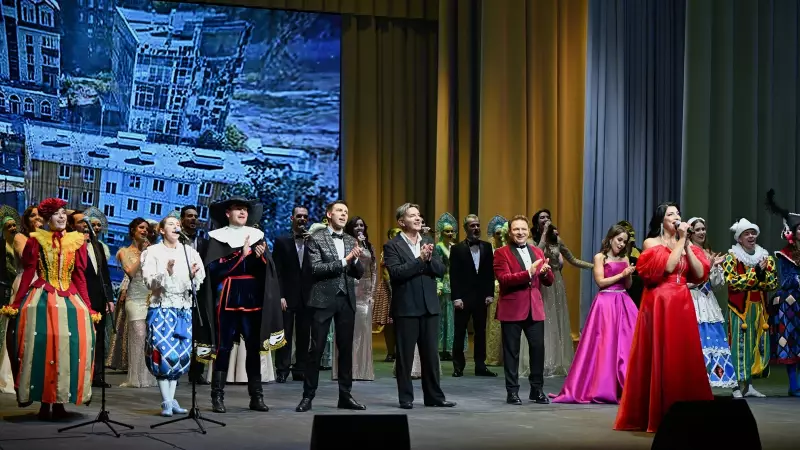
On Tuesday, the theater reopened its doors with a grand concert titled "The Motherland. Music. Spring." The event was attended by Russian Culture Minister Olga Lyubimova and the Moscow-installed head of the Donetsk region, Denis Pushilin. The reconstruction, which reportedly cost over 3 billion rubles, is presented by Russian officials as a sign of the city's "rebirth" and a restoration of "cultural life" under Moscow's control.

Contested Narrative and Ongoing Conflict
The reopening is not merely a cultural event but a potent piece of political theater itself. For Russia, it represents a tangible achievement in its effort to solidify control over the strategically vital port city, which was captured after a brutal, months-long siege that left much of it in ruins. The restoration of a landmark destroyed during the fighting is framed as a benevolent act of rebuilding.
However, for Ukraine and much of the international community, the new facade cannot erase the history of the site. Ukrainian officials and human rights groups have condemned the event as a cynical attempt to cover up a war crime. The attack on the theater remains under investigation by the International Criminal Court as a potential atrocity. The reopening is seen as an effort to impose a Russian narrative on a city where the scars of conflict are still fresh.
The Human Cost and Global Reaction
The attack on the Mariupol theater on March 16, 2022, stands as a stark reminder of the war's devastating human toll. Survivors' accounts and satellite imagery from the time played a crucial role in piecing together the events. The reopening has drawn sharp criticism from global leaders. European Commission spokesperson Peter Stano stated the EU condemns what he called Russia's "blatant attempt" to cover up its atrocities and rewrite history.
The event underscores the deep divide in how the war is portrayed. While Russian state media celebrates the theater's restoration as a symbol of progress and normalcy, the international community views it through the lens of the initial destruction and loss of life. The city of Mariupol remains a key symbol of Ukrainian resistance and suffering, and its reconstruction under Russian authority is a deeply contentious issue.
The reopening of the Mariupol drama theater is a powerful, multifaceted event. It is a story of physical reconstruction, political propaganda, and unresolved tragedy. It highlights the ongoing battle for control, not just of territory, but of history and memory in the midst of a brutal and continuing war.