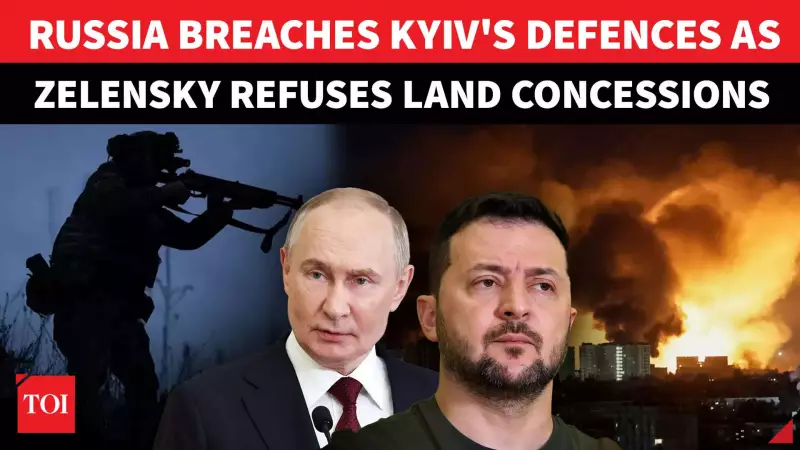
Intense combat has erupted across several fronts in Ukraine, with the Russian military announcing significant advances and powerful strikes against key Ukrainian command infrastructure. The situation on the ground remains fluid and violent, with diplomatic efforts to end the conflict completely stalled.
Russian Forces Report Breaches and Strikes
The Russian Defence Ministry has stated that its units have successfully breached fortified Ukrainian defensive positions in both southern and northeastern sectors of the conflict zone. According to their reports, soldiers engaged in fierce close-quarters combat to achieve these gains.
In a series of targeted attacks, Russian forces claim to have hit critical battalion command posts, severely disrupting Ukrainian military coordination. Additionally, they report successfully neutralising several Ukrainian unmanned aerial vehicle (UAV) units, which have played a crucial role in surveillance and attacks.

Advances in Key Regions
The ministry specified that these new battlefield movements have occurred in the Dnepropetrovsk and Kharkiv regions. The advances are described as hard-fought, involving the destruction of armoured vehicles and sustained artillery duels. The onset of winter conditions has not slowed the pace of military operations, contradicting earlier predictions that the conflict might enter a seasonal lull.
Diplomatic Channels Remain Frozen
This military escalation unfolds against a backdrop of a complete diplomatic standstill. The government in Kyiv has firmly rejected any notion of territorial concessions to Moscow as a basis for peace talks. Simultaneously, the Kremlin has publicly ruled out the possibility of agreeing to temporary ceasefires, indicating a strategy of maintaining relentless pressure.
The current phase of the war, marked by these claimed breaches and strikes on command centres, underscores a grim reality: with neither side willing to budge on core demands, the path to negotiations appears blocked. The conflict continues to evolve, with significant implications for regional and global security.