

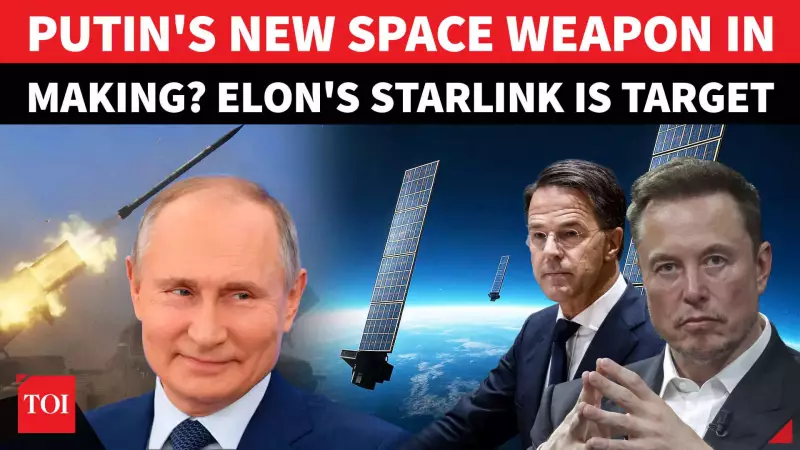
Fresh intelligence assessments from within the NATO alliance have raised a major alarm, indicating that Russia may be actively developing a radical new anti-satellite weapon system. The purported weapon is designed specifically to target and disable the Starlink satellite constellation, a system that has become vital for Ukraine's military communications and drone warfare.
The 'Zone-Effect' Weapon: A Pellet Storm in Orbit
According to reports sourced from two NATO member countries and detailed by The Associated Press, the proposed Russian system employs a concerning "zone-effect" methodology. Instead of targeting individual satellites, this concept aims to flood a specific area in low-Earth orbit with an immense cloud of high-density pellets. This cloud could consist of hundreds of thousands of these pellets, creating a destructive barrier capable of disabling or destroying multiple satellites that pass through it simultaneously. The primary objective, as per the intelligence, is Elon Musk's Starlink network, which has provided Ukraine with a critical, resilient communication backbone against Russian forces.
Strategic Target and Catastrophic Consequences
The focus on Starlink is deeply strategic. Since the onset of the war in Ukraine, the satellite internet service has allowed Ukrainian forces to maintain command, control, and real-time drone operations even when terrestrial networks are compromised. Neutralizing Starlink would deliver a significant blow to Kyiv's battlefield capabilities. However, analysts are issuing stark warnings that the repercussions of deploying such a weapon would be far-reaching and uncontrollable.

The creation of a massive, sudden debris field in orbit could trigger a cascade of collisions, threatening satellites operated by numerous countries, including Russia and China. This scenario, known as the Kessler Syndrome, could render vital orbital pathways unusable for decades, causing long-term chaos for global communications, navigation, and Earth observation.
Echoes of a Dangerous Past and a Weaponized Future
These new claims have forcefully revived global anxieties about the accelerating weaponization of space. They directly echo a controversial Russian anti-satellite missile test conducted in November 2021. That test destroyed a defunct Russian satellite, generating a dangerous and enduring cloud of debris that repeatedly forced astronauts aboard the International Space Station to take emergency shelter in their spacecraft due to the high risk of collision.
The potential development of a "zone" weapon represents a more scalable and indiscriminate threat compared to previous anti-satellite missiles. It underscores a new, volatile chapter in military competition, where the domain of space itself becomes a contested battlefield with consequences for every nation on Earth.






