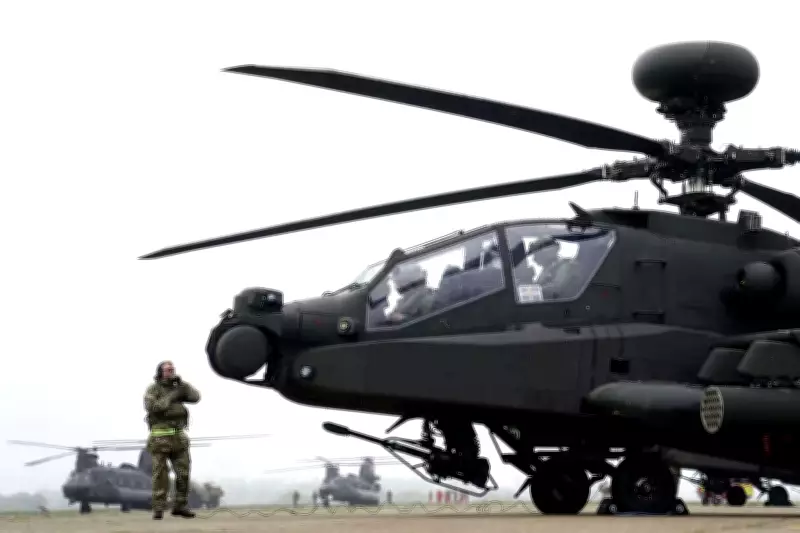
A US Navy autonomous surface vessel successfully rescued two crew members after an AH-64 Apache helicopter went down near the Strait of Hormuz, marking what is believed to be the first known use of an unmanned military vessel to recover personnel at sea. The incident occurred on Monday at 7:33 pm EDT, with the helicopter operating near the coast of Oman. US Central Command later confirmed that the two soldiers were rescued within approximately two hours and were reported to be in stable condition.
Details of the Incident
The Apache helicopter was conducting a patrol mission in regional waters near Oman, close to the strategically vital Strait of Hormuz, when it crashed. US military officials stated that naval assets from Naval Forces Central Command, Task Force 59, the 82nd Airborne Division, and supporting Air Force and Navy units participated in the rescue effort. The rescue has drawn attention to the Pentagon's expanding use of unmanned systems in operational missions and highlighted Task Force 59, the US Navy's Bahrain-based unit dedicated to autonomous platforms.
What is the Saronic Corsair?
The Corsair is an autonomous surface vessel developed by Saronic Technologies, a defence technology company based in Texas. According to the official website, the Corsair is a 24-foot (7.3-metre) Autonomous Surface Vessel capable of carrying up to 1,000 pounds over 1,000 nautical miles. It is designed to deliver multi-mission capabilities rapidly and at scale around the world, with a claimed top speed of over 35 knots. The vessel is part of a broader US military push to integrate autonomous systems into maritime operations. Task Force 59 has been actively testing and deploying a growing fleet of sea drones across the Middle East since its establishment in 2021.

Role of Sea Drones in Military Operations
Sea drones have primarily been used by the US military for surveillance, communications support, mine-clearing, and intelligence-gathering missions. The Apache rescue, however, demonstrated their potential role in rapid-response operations involving human lives. The US has been actively deploying both unmanned surface vessels and underwater vehicles, providing commanders with flexibility depending on mission needs. However, many of the advanced underwater unmanned systems remain highly secretive. Sea drones are not exclusive to the US military; Ukraine has extensively used its own unmanned surface vessels, claiming they have sunk multiple Russian warships and damaged helicopters.
Implications and Future Prospects
The successful rescue underscores the growing capabilities of autonomous systems in critical missions. As the US military continues to integrate such technologies, the role of unmanned vessels in personnel recovery and other high-stakes operations is likely to expand. The Corsair's performance in this incident could accelerate the adoption of similar systems across various branches of the armed forces.