

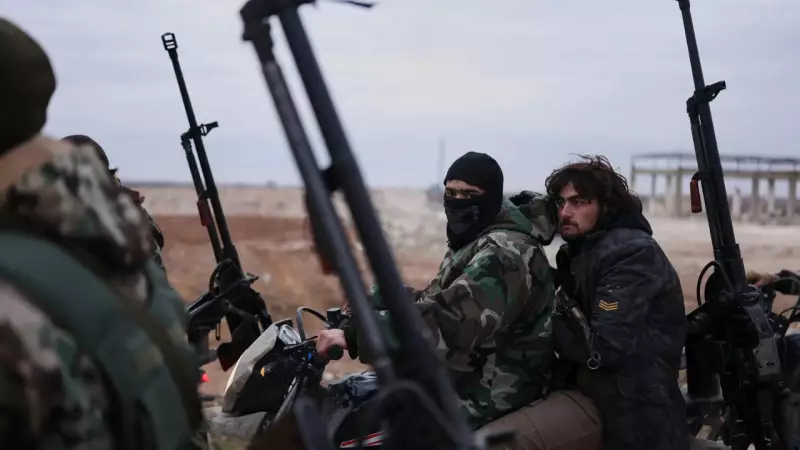
Syrian government forces pushed into Kurdish-controlled regions of northern Syria on Saturday. They captured several towns, sparking intense clashes that shattered a tentative political agreement. This deal aimed to restore central government authority across the country.
Background of Rising Tensions
This military move follows weeks of escalating tension. Heavy fighting erupted earlier this month between government troops and the Syrian Democratic Forces (SDF). The SDF is a Kurdish-led militia backed by the United States.
The Syrian army announced it took control of the Tabqa military airport in Raqqa province. Kurdish forces previously held this strategic site. The AFP news agency confirmed this development.

Raqqa's Symbolic Importance
Raqqa holds deep symbolic value in the Syrian war. The Islamic State group captured the city in 2014. They declared it the capital of their self-proclaimed caliphate.
A US-led coalition later liberated Raqqa after a devastating campaign. The city suffered severe damage. Since then, the SDF has maintained control with a small contingent of US forces stationed nearby.
Stalled Political Integration
Political integration talks have faced significant obstacles. Since President Bashar Assad was ousted last year, Kurdish authorities have resisted placing their forces under the new government's command.
Negotiations to incorporate Kurdish military and civilian structures into the post-war Syrian state continued for months. These talks have recently stalled, creating a power vacuum.
International Concerns Grow
The renewed violence has heightened alarm in Washington. US officials fear a broader conflict between Damascus and Kurdish forces. Such a conflict could jeopardize efforts to prevent an Islamic State resurgence.
It also places American troops in Syria at direct risk. The government advance occurred just hours after SDF fighters withdrew from positions east of Aleppo.
A Short-Lived Calm
This pullback followed a presidential decree issued on Friday. Syrian President Ahmad al-Sharaa affirmed the rights of Kurdish Syrians. The move was widely seen as an attempt to ease tensions after government strikes in the area.
However, the calm proved fleeting. Both sides quickly accused each other of violating the understanding. Clashes spread rapidly across the region.
US Calls for Restraint
US officials urgently called for restraint as violence escalated. Admiral Brad Cooper, head of US forces in the Middle East, issued a direct appeal. He demanded Syrian government troops cease all offensive actions near Aleppo.
Separately, US special envoy Thomas J. Barrack Jr. met with Kurdish leaders in northern Iraq. Washington is actively working to prevent a wider confrontation.
Fighting Spreads to Key Areas
Reports indicate fighting in multiple towns and villages. Government forces stated they are advancing through oil-rich territories. Their target is the strategic town of Tabqa, located roughly 30 miles from Raqqa.
The human cost is already severe. At least 24 civilians have died in five days of fighting. Thousands more have been forced to flee their homes.
Deadliest Violence Since War's End
These clashes represent some of the deadliest violence since Syria's civil war officially ended. The conflict concluded in December 2024 when al-Sharaa's rebel coalition overthrew the Assad regime.
The current situation threatens to unravel the fragile peace. It underscores the deep divisions that remain within Syrian society and the complex geopolitical interests at play.






