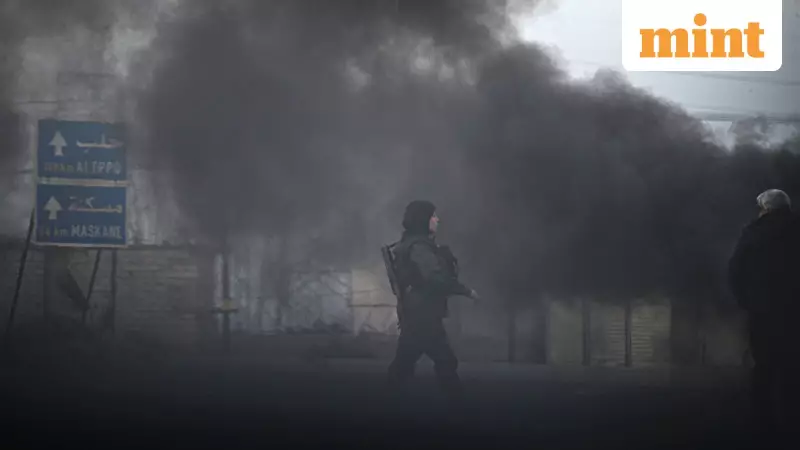
Syrian Forces Capture Strategic Oil Fields and Cities in Major Northern Push
Syrian government forces achieved a significant breakthrough on Sunday by capturing the al-Omar oil field, the country's largest petroleum asset. This development came as fighting intensified dramatically between the Syrian military and the Kurdish-led Syrian Defence Forces, which receive backing from the United States.
Major Territorial Gains for Syrian Military
With this latest offensive push, Syria's military has seized extensive territories in the country's northern regions. The advance has effectively dislodged the SDF from areas where Kurdish-led forces maintained autonomy for more than ten years. The retreat from the al-Omar oil field was confirmed by Reuters on Sunday.
Al Jazeera reported that the SDF also withdrew from the al-Tanak oilfield located in the eastern Deir Az Zor countryside. Government forces have taken control of the Conoco gasfield in the same Deir Az Zor area, marking a substantial shift in control over Syria's energy resources.

Strategic Cities Fall to Government Control
Fighting continues to rage across multiple fronts in Syria. The Syrian news agency SANA reported the destruction of two bridges on the Euphrates River that lead to the city of Raqqa, which is currently under siege by military forces.
Tabqah, a strategic stronghold city approximately 55 kilometers west of Raqqa, has also fallen to Syrian government control. Information Minister Hamza Almustafa confirmed this development, stating that the Syrian army now controls Tabqa in the Raqqa countryside, including the Euphrates Dam, which represents Syria's largest dam.
Military Strategy and Regional Implications
With Raqqa under siege, Al Jazeera reported that the Syrian military's rapid advance has resulted in the SDF losing key areas within the Raqqa governorate. Military analysts indicate that Syrian forces are employing a pincer strategy, moving both east and south of SDF defensive lines while attempting to push Kurdish-led forces further north toward the Turkish border.
As Kurdish-led forces lose ground rapidly, regional diplomacy has intensified. The president of Iraq's autonomous northern Kurdish region held a telephone conversation with French President Emmanuel Macron. The French leader subsequently called for de-escalation in Syria and urged a permanent ceasefire to prevent further bloodshed.
Background to the Current Conflict
The current escalation follows significant political developments in Syria. After the ouster of President Bashar al-Assad in late 2024, new President Ahmed al-Sharaa announced his intention to integrate Kurdish military and civilian institutions into Syrian national structures. In March 2025, the SDF signed an agreement with the government toward this integration goal.
Despite this agreement, implementation has stalled, with both sides accusing each other of failing to fulfill promises. Deadly clashes erupted last week between SDF militia and government forces, prompting the United States to urge both parties to avoid confrontation.
On Friday, President al-Sharaa issued a landmark decree representing the first formal recognition of Kurdish rights since Syria gained independence in 1946. The decree established Kurdish as a national language and granted Syrian nationality to all Kurds within the country's borders. Kurds constituted approximately 10 percent of Syria's population as of 2011.
Kurdish authorities acknowledged the decree as a first step toward integration. This prompted the SDF to announce withdrawal from certain northern territories. However, fighting broke out when the SDF accused Damascus of violating recent agreements by entering SDF territory before Kurdish forces completed their withdrawal.
The situation remains fluid as military operations continue across northern Syria, with control over key infrastructure and territory shifting rapidly between government forces and Kurdish-led militias.