

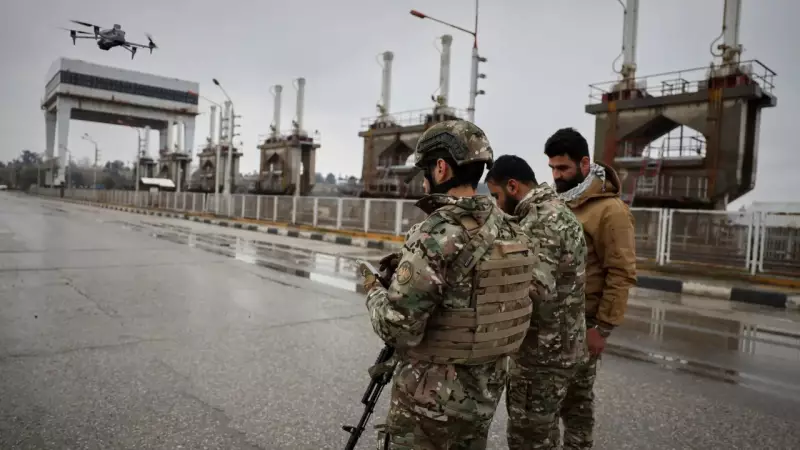
Syrian government forces seized control of Tabqa on Sunday. This strategic town lies in eastern Syria. The advance pushed troops into territory held by the Kurdish-led Syrian Democratic Forces, or SDF.
Strategic Importance of Tabqa
The capture of Tabqa holds major strategic value. The town is home to a critical dam. This dam controls water flow into deeper SDF-held areas. Tabqa also contains a significant air base. Its fall marks the latest Arab-majority area in Raqqa province to come under government control.
Clashes and Accusations
The move followed months of rising tension. According to Syrian state media, Kurdish fighters destroyed a bridge. They aimed to slow the government's advance. Damascus also accused the SDF of executing prisoners before withdrawing. The SDF strongly denied this charge.

The Kurdish-led force stated detainees were simply relocated. They claimed government forces fired shots at the prison facility. Video footage emerged from SDF channels. It showed armed men in civilian clothes seizing ammunition inside the building. No bodies were visible in the shared video.
Broader Context of the Conflict
This development raises serious questions. Observers wonder how far government troops intend to push. Their direction appears aimed toward Kurdish-populated zones. The situation follows deadly clashes in Aleppo earlier this month. Those fights killed at least 23 people. They displaced tens of thousands from their homes.
Failed Agreements and Military Zones
The recent flare-up occurred amid disputes over a March agreement. That deal was meant to reintegrate northeast Syria under state authority. After the Aleppo clashes subsided, SDF commander Mazloum Abdi made an announcement. He said forces would withdraw east of the Euphrates River.
This statement came after President Ahmad al-Sharaa announced new measures. The measures aimed to bolster Kurdish rights. In response to the Aleppo fighting, Syria's defence ministry took action. They designated parts of eastern Aleppo as a closed military zone. This zone sits along a sensitive frontline.
International Reactions and Regional Tensions
The United States has urged calm. American officials have tried to mediate between the two sides. The US built strong ties with the new Damascus government after President Assad's ouster in December 2024.
Further east, in Deir el-Zour province, tensions remain high. The local governor warned residents to stay indoors. Reports indicate Arab tribal clashes with the SDF near key oil and gas fields. US troops are stationed in these areas.
Territorial Shifts and Observers' Reports
The Syrian Observatory for Human Rights provided an update. They reported that government forces have taken more than a dozen villages. These captures occurred as SDF units withdrew from their positions.
Core Issues Driving the Conflict
The SDF controls much of northeast Syria. This force is dominated by Kurdish fighters. It served as Washington's main partner in the fight against ISIS. Kurdish groups continue to seek autonomy within Syria. Damascus remains committed to full territorial reintegration.
Several factors continue to shape the conflict's northeast front. Arab-Kurd tensions run deep. US involvement adds another layer of complexity. Remnants of ISIS still pose a threat in the region. The capture of Tabqa represents another shift in this volatile landscape.






