Ukraine Launches Deep-Strike Attack on Russian Missile Production Facility
The Ukrainian military has confirmed conducting a significant drone and missile strike operation deep inside Russian territory overnight, targeting critical industrial infrastructure. According to statements from the General Staff in Kyiv, the assault successfully hit a major defense manufacturing site in the Udmurt Republic and a gas processing plant in the Samara region.
Strategic Target: Votkinsk Missile Production Complex
The primary target was the Votkinsk industrial facility located approximately 1,400 kilometers from the Ukrainian border. Ukrainian authorities identified this site as a crucial production center for intercontinental and short-range ballistic missiles, including the Iskander missile systems that have been extensively deployed against Ukrainian targets throughout the ongoing conflict.
Regional health minister Sergei Bagin reported through Telegram that the attack resulted in 11 injuries, with three individuals requiring hospitalization. Alexander Brechalov, the regional head of Udmurtia, confirmed on the same platform that "one of the republic's facilities was attacked by drones" resulting in both casualties and structural damage.

Unofficial Reports and Local Accounts
Unofficial Russian sources, including prominent Telegram channels Astra and SHOT, provided additional details indicating the strike specifically targeted the Votkinsk Machine Building Plant. This facility represents a major state-owned defense enterprise central to Russia's military-industrial complex.
Local residents described hearing at least three powerful explosions during the nighttime assault and observed multiple drones operating overhead. Video evidence circulating on social media platforms showed substantial black smoke billowing from industrial structures and extensive window damage at the facility.
The Russian civil aviation authority Rosaviatsiya responded by temporarily suspending operations at Izhevsk's main airport and several nearby regional airports early Saturday morning as a security precaution.
Broader Conflict Context and Reciprocal Attacks
This Ukrainian offensive operation comes just days after U.S.-brokered peace negotiations between Moscow and Kyiv concluded in Geneva without achieving any diplomatic breakthrough. The latest round of discussions was characterized by international observers as largely unproductive, occurring as Ukraine approaches the four-year anniversary of the Russian invasion that began in February 2022.
Simultaneously, the Ukrainian Air Force reported that Russian forces launched an extensive overnight barrage consisting of 120 drones and one ballistic missile targeting multiple Ukrainian population centers. Ukrainian air defenses successfully intercepted 106 of the incoming drones, though the ballistic missile and 13 drones managed to strike 11 different locations, causing additional damage and injuries.
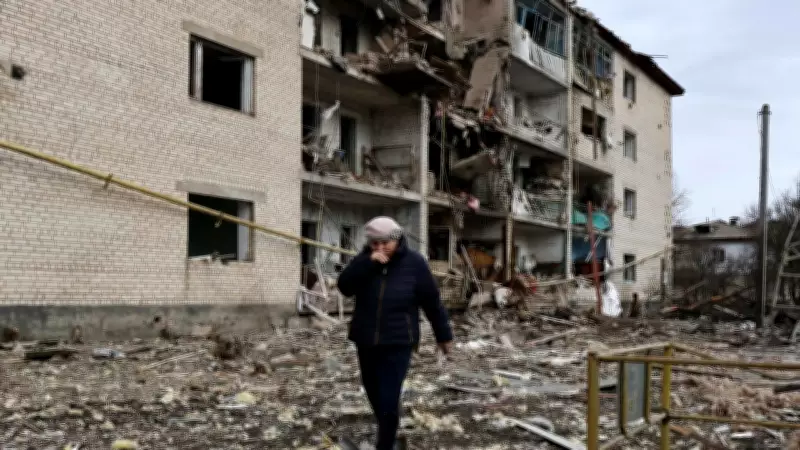
Oleh Kiper, governor of Ukraine's Odesa region, detailed that civilian and energy infrastructure sustained significant damage, including a secondary school and energy company warehouses. These attacks resulted in two injuries among the local population.
President Volodymyr Zelenskyy emphasized earlier this week that tens of thousands of Odesa residents have been left without heating and running water due to persistent Russian assaults, calling for increased international accountability measures against Moscow.
Information Warfare and Digital Restrictions
In a separate development, Russia's Federal Security Service (FSB) has alleged that Ukrainian military forces have exploited data from the Telegram messaging application for operational purposes, potentially endangering Russian troops. The security agency claimed to possess "numerous reliable reports" regarding threats to service members, though no specific evidence was publicly presented.
This accusation coincides with recent legislative actions by Russian President Vladimir Putin, who signed into law new provisions allowing mobile operators to block internet services upon direct request from the FSB. Roskomnadzor, Russia's communications regulatory body, has announced plans for additional restrictions targeting Telegram, which remains widely utilized by military personnel despite government concerns.

Since the conflict's inception, Russia has systematically restricted access to major international platforms including Twitter, Facebook, Instagram, YouTube, and WhatsApp. Security analysts interpret these measures as part of a broader strategy to control information dissemination and military communications amid the protracted confrontation with Ukraine.