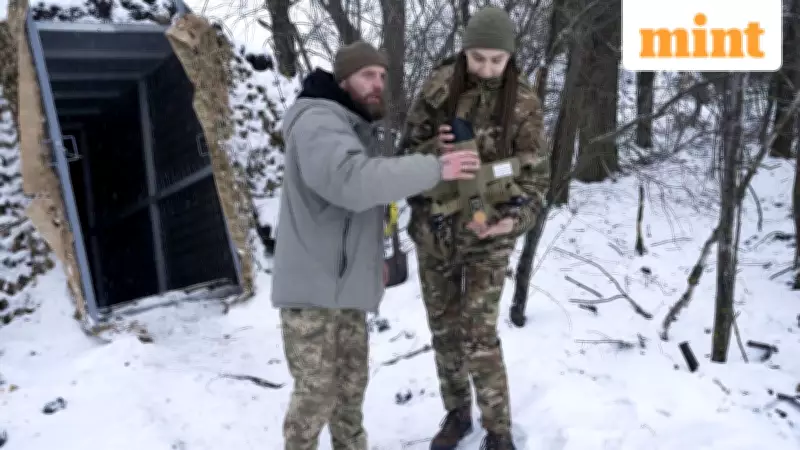
Ukraine's Strategic Pivot: Moving Beyond a Body-Count Focus in the War
As the brutal conflict between Russia and Ukraine approaches the grim milestone of four years, a critical strategic reassessment is underway within Ukrainian military circles. The current approach, heavily focused on inflicting maximum casualties on Russian infantry, is increasingly viewed as insufficient to counter Moscow's methodical, grinding advance. This shift in thinking comes as Russia's effective use of drone warfare systematically weakens Ukraine's defensive posture and strengthens the Kremlin's hand in any potential future negotiations.
The Russian Drone Doctrine: Targeting the Rear
In the snow-covered landscapes of southeast Ukraine, particularly around Novomykolaivka and the broader Zaporizhzhia region, the devastating impact of Russia's revised battlefield strategy is starkly visible. Burned-out pickup trucks litter the roads, evidence of relentless drone attacks aimed at severing Ukrainian supply lines and logistics. Russian forces have honed a drone strategy focused on a medium operational range of approximately 12 to 50 miles behind the front lines.
Priority targets for these Russian drones include Ukrainian drone operators themselves, along with critical logistical hubs and command structures. This systematic approach, described by Vienna-based military analyst Franz-Stefan Gady, seeks to disrupt and destroy the "center of gravity" of Ukraine's defensive system. By contrast, Ukraine's primary tactic has remained concentrated on creating kill zones for Russian infantry within about 12 miles of the front, aiming to maximize enemy casualties.

The High Cost of the Current Approach
Ukrainian Defense Minister Mykhailo Fedorov recently articulated an ambitious goal: to increase monthly Russian soldier fatalities to 50,000, up from 35,000 in December. However, this focus on attrition is meeting growing skepticism from officers on the ground. The human cost has been catastrophic on both sides. According to estimates from the Center for Strategic and International Studies in Washington, Russian casualties have reached nearly 1.2 million killed and wounded, while Ukraine has likely suffered between 500,000 and 600,000 total casualties.
Despite this staggering toll, Russia has not relented. Its forces continue a slow, persistent advance, now positioning themselves within 14 miles of the outskirts of Zaporizhzhia city, a major urban center with a prewar population of 700,000. There are growing fears that Russia could replicate its tactics from Kherson, using constant drone attacks to make daily civilian life untenable.
Voices from the Front: A Call for Change
Major Oleh Shyriayev, commander of the 225th Assault Regiment fighting in southern Zaporizhzhia, advocates for a strategic shift. "Everything rests on their shoulders at the tactical level," he stated, emphasizing that Ukrainian forces could better resist relentless Russian pressure by systematically targeting Russian drone operators and command posts located many miles behind the line of contact. Currently, Ukrainian troops often operate like firefighters, rushing to plug gaps in a thinly held front line.
The challenges are palpable in the countryside roughly 15 miles behind the southern front. Long sections of road are covered with antidrone nets, some torn by sleet and ice, which workers struggle to repair. A deputy brigade commander on the southern front explained the Russian tactic: they select a road and attempt to destroy everything on or near it. The psychological goal is to terrorize Ukrainian soldiers, making all movement to and from the front line a harrowing experience.
His brigade is actively working to build midrange drone capabilities to strike Russian forces up to 15 miles behind the front line, aiming to preempt infiltration attempts. However, progress is slow. Russian tactics have evolved; they now rarely launch direct assaults. Instead, small groups of soldiers attempt to bypass Ukrainian positions to sow chaos deep in the rear areas, paying a high price but persistently returning.

The Human Dimension of Drone Warfare
For Ukrainian infantry, Russia's midrange drones have made rotation—the movement to and from the front line—the most perilous part of their duty. A 52-year-old rifleman with the call sign "Psycho," his face etched with the extreme exhaustion of prolonged front-line service, confirmed this grim reality. "During rotations, unfortunately, there are a lot of losses, the most losses," he said after a brief respite at a psychological support center.
The drone war is a constant, deadly chess match. A Ukrainian surveillance-drone pilot, call sign "Kuts," recently spotted three Russian soldiers a mere kilometer from his position while returning his drone to base. "No one can understand how they got there," he remarked, before directing attack drones to eliminate the threat. Kuts pays limited attention to the ongoing peace negotiations involving Russia, the U.S., and Ukraine. With no deal imminent, he finds it more useful to monitor the icy fields of Zaporizhzhia on his video feed. "They say one thing publicly," he observed. "But on the battlefield, I see intensified assault operations."
The Path Forward: Arsenal and Alliance
Analyst Franz-Stefan Gady notes that while Ukraine possesses superior individual drone pilots, their strikes against rear-area targets remain piecemeal compared to Russia's systematic campaign. A critical shortfall lies in Ukraine's arsenal: a lack of drones and other weaponry capable of reliably hitting midrange targets 20 to 120 miles behind the front line. Addressing this capability gap is seen as essential for a more effective defense.
The conclusion drawn by many Ukrainian soldiers and analysts is clear: sustaining the current casualty-centric strategy is unsustainable. To stabilize the front lines, particularly in the strategically vital south where troop coverage is sparse, and to improve its negotiating position, Ukraine must evolve. This requires not only an internal tactical shift towards disrupting Russian command and drone logistics but also increased and sustained support from Western partners to bolster its midrange strike capabilities. The war's next phase may depend on Ukraine's ability to look beyond the kill count and systematically degrade the Russian war machine's operational backbone.