US Deploys Largest Military Force to Middle East Since 2003 Iraq Invasion
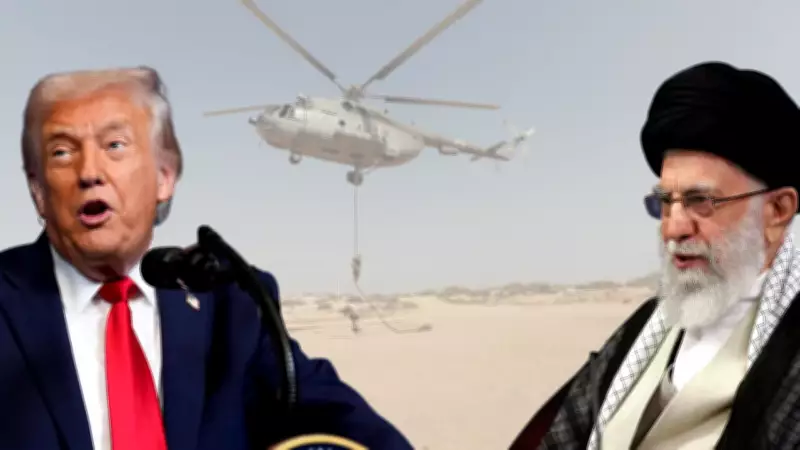
The United States has mobilized its most substantial military presence in the Middle East since the 2003 invasion of Iraq, escalating tensions and fueling fears of imminent strikes against Iran. President Donald Trump is actively considering his options, balancing the risks of military action with potential diplomatic gains, as sources indicate readiness for attacks as early as this weekend.
Diplomatic Efforts Amid Military Buildup
White House Press Secretary Karoline Leavitt emphasized on Wednesday that diplomacy remains Trump's "first option," but military action is firmly on the table. "There’s many reasons and arguments that one could make for a strike against Iran," she stated, noting the president relies heavily on advice from his national security team. Indirect talks between US and Iranian officials in Geneva this week resulted in an agreement on a "set of guiding principles," though key details remain unresolved, according to CBS reports.
Naval and Air Power Surge in the Region
The military buildup includes:

- 13 US warships already stationed in the Middle East, featuring the aircraft carrier USS Abraham Lincoln, nine destroyers, and three littoral combat ships.
- A second carrier, the USS Gerald R. Ford—the world's largest—ordered from the Caribbean and expected within weeks, accompanied by three destroyers.
Air power is also intensifying, with advanced F-22 and F-35 fighter jets, F-15 and F-16 warplanes, and KC-135 aerial refueling aircraft repositioned closer to Iran. Command-and-control planes have arrived to coordinate a potential sustained air campaign. Flight-tracking data shows E-3 Sentry airborne warning and control aircraft operating in the region, laying groundwork for operations that could last weeks.
Susan Ziadeh, senior advisor at the Center for Strategic and International Studies, commented: "This presence of so much firepower in the region creates a momentum of its own. Sometimes that momentum is a little hard to just put the brakes on and say, that’s it, we’re not doing anything."
Iran Fortifies Key Facilities in Response
In response, Iran has ramped up defensive preparations. Satellite imagery analyzed by the Institute for Science and International Security (ISIS) and reported by Reuters reveals:
- Construction of concrete shields over sensitive facilities, including the Taleghan 2 site near Parchin.
- Tunnel entrances at the Isfahan nuclear complex buried in soil.
- Sites near Natanz being hardened, and missile bases in Shiraz South and Qom rebuilt after last year's strikes by Israel.
William Goodhind, a forensic imagery analyst with Contested Ground, warned: "Backfilling the tunnel entrances would help dampen potential airstrikes and make ground access difficult." ISIS founder David Albright noted that Iran's recent activity "may soon become a fully unrecognisable bunker, providing significant protection from aerial strikes."
Strategic Stakes and Regional Impact
US officials briefed Trump on options ranging from limited strikes on nuclear and missile facilities to broader operations targeting regime leaders and regional proxies. Long-range bombers, including B-2s, could be deployed from the US or Diego Garcia in the Indian Ocean, as hinted by Trump on social media.
Iran, heavily reliant on its missile arsenal and lacking a significant air force, might respond by targeting US bases and allies or attempting to close the Strait of Hormuz. Retired Air Force General David Deptula suggested: "The dramatic increase in deployed forces may be significant enough that Trump is not messing around with the use of force," potentially pushing Tehran toward concessions.