

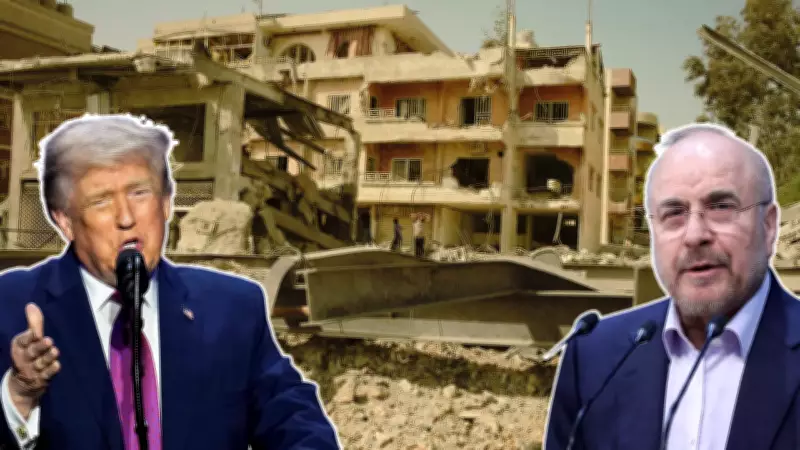
US Extends Iran Ceasefire Amid Ongoing Hormuz Blockade; Iran Suffers Heavy Financial Losses
In a significant development, US President Donald Trump has announced an indefinite extension of the ceasefire with Iran, a move that temporarily averts an immediate return to full-scale conflict. However, the decision comes with a major caveat: the United States will continue its naval blockade of the Strait of Hormuz, a critical global shipping chokepoint. President Trump claims this blockade is causing Iran to lose approximately $500 million per day due to restricted oil exports, applying intense economic pressure on Tehran.
Fragile Truce and Diplomatic Shifts
Despite the ceasefire extension, underlying tensions remain dangerously high. Key disputes over sanctions, Iran's nuclear program, maritime security, and military postures threaten to unravel the fragile truce. Diplomatic efforts have now shifted to Islamabad, where Pakistan is preparing to host a new round of peace talks. Global attention is focused on whether these negotiations can prevent a wider regional crisis that could destabilize the Middle East and impact the global economy.
Strait of Hormuz: The Epicenter of Conflict
The Strait of Hormuz has emerged as the central flashpoint in this confrontation. Normally, this narrow waterway facilitates the passage of nearly one-fifth of the world's oil and liquefied natural gas supplies. During the recent conflict, Iran temporarily closed the route, causing sharp spikes in oil prices and fears of supply shortages. Although briefly reopened, Tehran shut it again after accusing Washington of violating the ceasefire through naval enforcement actions and the seizure of an Iranian-linked vessel.

Trump has defended the continued US blockade, stating it is necessary to compel Iran into accepting a formal peace agreement. He emphasized that the blockade will remain until Iranian leaders present a unified proposal for negotiations. Simultaneously, Trump warned that if talks fail, military escalation could follow swiftly, raising alarms in international markets and diplomatic circles.
Iran's Defiant Response and Internal Warnings
Iranian leaders have vehemently rejected the US approach, accusing Washington of attempting to force surrender through threats rather than engaging in genuine diplomacy. Parliamentary speaker Mohammad Baqer Ghalibaf stated that the United States desires a "table of surrender" and warned that Iran is prepared to reveal "new cards on the battlefield" if hostilities resume.
Further escalating rhetoric, Mahdi Mohammadi, an adviser to Iran's parliament speaker, dismissed Trump's ceasefire extension as meaningless. In a social media post, Mohammadi argued that "the losing side cannot dictate terms" and described the ongoing blockade as equivalent to active bombardment, calling for a military response. He suggested the extension might be a ploy to buy time for a surprise US strike.
Adding to the tensions, General Majid Mousavi, chief of Iran's Revolutionary Guard aerospace division, issued a stark warning to Gulf nations. He cautioned that any support for "US aggression" against Iran could lead to severe consequences, including damage to oil infrastructure in the region. Mousavi explicitly stated that if neighboring countries allow the US to use their facilities for attacks, they should "say goodbye to oil production in the Middle East."
International Reactions and Market Impacts
UN Secretary-General António Guterres welcomed the ceasefire extension, calling it "an important step toward de-escalation." His spokesperson, Stephane Dujarric, urged all parties to build on this momentum, avoid actions that could undermine the ceasefire, and engage constructively to achieve a lasting resolution.
On the economic front, US crude oil prices rose despite the ceasefire extension, reflecting ongoing uncertainty. West Texas Intermediate futures climbed to as high as $90.70 a barrel, driven by concerns over the continued blockade of the Strait of Hormuz and the precarious nature of peace talks. Shipping data indicated that only three vessels passed through the waterway in a 24-hour period, highlighting the severe disruption to global energy supplies.

Pakistan's Mediation Role and Upcoming Talks
Pakistan has emerged as a crucial mediator in this conflict. Prime Minister Shehbaz Sharif thanked President Trump for accepting Pakistan's request to extend the ceasefire, allowing more time for diplomatic efforts. Sharif expressed hope that both sides would continue to observe the truce and work towards a comprehensive 'Peace Deal' during the second round of talks scheduled in Islamabad.
However, the path to negotiations remains fraught with challenges. The United States is reportedly planning to send Vice President JD Vance to the talks, but Iran's participation is uncertain. Reports from Iranian state media suggest Tehran may boycott the summit due to perceived excessive American demands and inconsistent positions. Security in Islamabad has been tightened in anticipation of the possible high-level meeting.
Broader Implications and Future Outlook
The ceasefire extension, while providing a temporary reprieve, does little to resolve the core issues fueling the US-Iran conflict. With trust at a nadir and rhetoric intensifying on both sides, the upcoming hours and days could prove decisive. The Islamabad talks represent a critical opportunity to bridge divides and prevent a collapse of the truce.
If diplomacy fails, the conflict could escalate rapidly, leading to wider regional instability and further disruptions to global energy markets. The situation underscores the delicate balance between military pressure and diplomatic engagement, with the Strait of Hormuz remaining a strategic linchpin in this high-stakes geopolitical standoff.





