US and Israel Launch Coordinated Military Strikes Against Iran
The United States and Israel initiated coordinated military strikes on Iran in the early hours of Saturday, marking a significant escalation in the ongoing tensions within the Middle East. Multiple explosions were reported across Tehran and various other regions of Iran, signaling the onset of a serious regional conflict.
Initial Strikes and Immediate Retaliation
The first apparent strike targeted areas near the offices of Iran's supreme leader, Ayatollah Ali Khamenei, according to reports from Iranian media cited by the Associated Press. In response, Iran's paramilitary Revolutionary Guard announced it had launched a "first wave" of drones and missiles targeting Israel. Explosions were heard across northern Israel as air defense systems engaged incoming projectiles, with sirens also sounding in Jordan. No immediate casualties were reported from these initial exchanges.
Israeli Defense Minister Israel Katz and later US President Donald Trump confirmed the operation. Trump stated in a video posted on Truth Social that the US had begun "major combat operations in Iran," with the objective of defending the United States by "eliminating imminent threats from the Iranian regime."

Operation Details and Official Statements
Israel described the attack as a "broad, coordinated, and joint operation against the regime" that had been planned for months in collaboration with the US military. Prime Minister Benjamin Netanyahu hailed the offensive, dubbed "Operation Lion's Roar," asserting that Tehran's "murderous terrorist regime" cannot be permitted to possess nuclear weapons.
In his video message, Trump acknowledged the risks involved, stating, "The lives of courageous American heroes may be lost, and we may have casualties. That often happens in war." He accused Iran of rejecting diplomatic overtures regarding its nuclear ambitions, warning Iranian officials to "lay down your arms" or "face certain death."
Widespread Impact and Regional Reactions
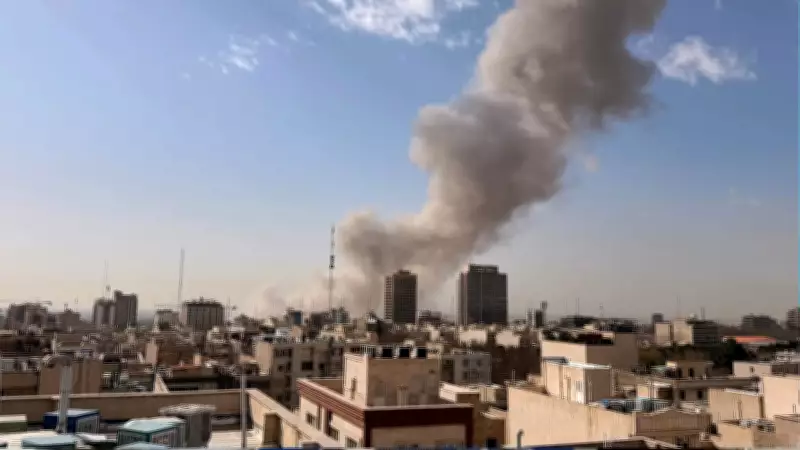
Iranian media reported strikes across the country, with smoke visible rising from parts of Tehran. Residents described hearing heavy explosions, with one near Mehrabad airport reporting "two heavy explosions" that shook windows. Iranian state television broadcast footage of heavily damaged buildings in the capital, showing rescue workers searching through rubble for survivors.
The conflict triggered immediate regional repercussions. Bahrain's state news agency reported that the service center of the US 5th Fleet had been subjected to a missile attack. US embassies and consulates in Qatar, the United Arab Emirates, and Israel issued advisories for staff and American citizens to shelter in place.
Airspace Closures and Military Buildup
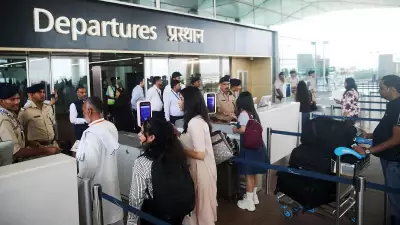
Iraq closed its airspace following the strikes on neighboring Iran, evacuating all air traffic beforehand. Israel's airports authority completely closed the country's airspace, diverting en route flights to other airports and sending waiting passengers back to various locations within Israel.
Ahead of the strikes, the US had significantly expanded its military presence in the Middle East. Aircraft carriers USS Abraham Lincoln and USS Gerald R Ford, along with multiple guided-missile destroyers, were deployed to the region and the Mediterranean. These deployments added more than 10,000 US troops to the area, supported by hundreds of fighter jets and support aircraft, creating the infrastructure necessary for sustained military operations.
Nuclear Dispute at the Core of Conflict
Trump accused Iran of attempting to rebuild its nuclear program and continue developing long-range missiles, despite earlier US strikes on Iran's nuclear facilities during a 12-day conflict in June. He stated that these missiles could threaten "our very good friends and allies in Europe, our troops stationed overseas, and could soon reach the American homeland."
Iran has maintained that it has not enriched uranium since June but has blocked international inspectors from visiting bombed sites. Satellite images analyzed by AP showed new activity at two of those sites, suggesting Tehran may be assessing or recovering material.

The situation remains fluid, with both sides signaling potential for further escalation as the international community watches developments closely in this volatile region.