

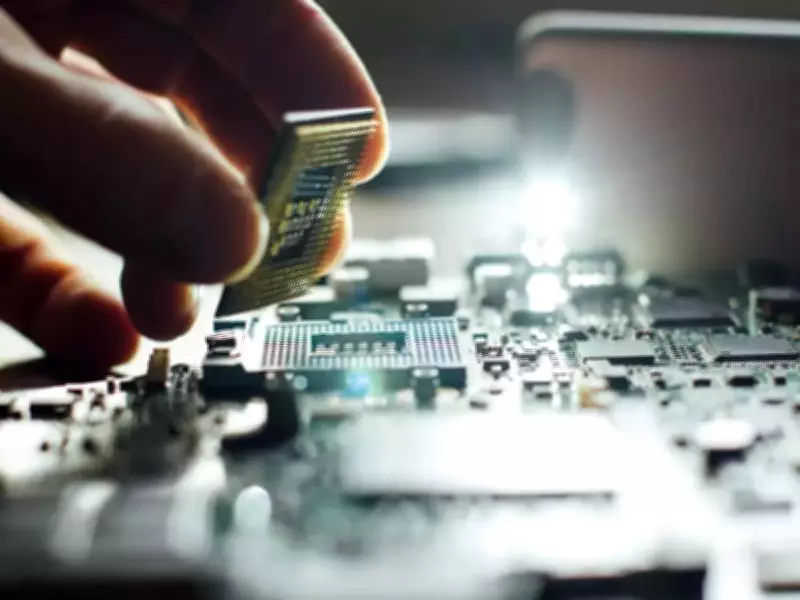
The global technology industry is already grappling with rising semiconductor costs, but the escalating conflict involving the United States, Israel, and Iran is now threatening to trigger a deeper crisis by disrupting critical supply chains. According to a Reuters report, the war has begun to impede the flow of circuit boards and raw materials, escalating costs and introducing fresh uncertainty for manufacturers worldwide. Iran's strategic location along key shipping routes has made the conflict particularly damaging for the electronics sector.
Disruption of Circuit Board Supply
The ongoing war has disrupted the movement of circuit boards, which are essential components for smartphones, laptops, and servers. As per the Reuters report, this disruption is forcing companies to seek alternative supplies at higher prices. Analysts warn that this could lead to production delays and increased costs for customers, compounding the challenges already posed by inflation and high demand for AI-driven hardware.
Impact on Major Tech Giants
Major tech players such as Apple, Dell, and HP are reportedly monitoring the situation closely as supply chain bottlenecks threaten their ability to meet delivery schedules. The Reuters report further adds that smaller companies, which lack diversified sourcing strategies, may be hit even harder. The war has also raised concerns about long-term stability in the Middle East, a region critical to global energy and shipping networks.

Potential Long-Term Consequences
Experts suggest that if the conflict continues, tech companies may need to restructure supply chains, shifting production to regions less exposed to geopolitical risk. However, such moves could take months or even years, leaving firms vulnerable in the short term.
Iran War Hits Trump's AI Chip Export Push
Earlier this month, it was reported that the Iran war has dealt a blow to President Donald Trump's AI chip export push. Trump came to office promising to make America the undisputed leader in artificial intelligence. However, the small government office responsible for approving the export of American chips and technology to the world is buckling, and his own administration's policy choices may be making it worse. According to a Bloomberg News investigation, the Bureau of Industry and Security, housed within the Commerce Department, is facing a combination of staff departures, lengthy approval delays, and shifting policy direction at precisely the moment it is needed most.
Bloomberg reports that export license approvals for chipmakers and technology companies have stretched to several months, creating multi-billion dollar backlogs—including for shipments bound for close US allies. Citing data compiled by the Semiconductor Industry Association from members including Intel, AMD, and ASML, the report says that in the first half of 2025, licenses for chip exports to allies such as Canada, Japan, and the United Kingdom took an average of 76 days—roughly double the 38-day average recorded in 2023.






