U.S. Launches Major Military Strike on Iranian Missile Sites Near Critical Oil Route
In a significant escalation of tensions, the United States has executed a substantial military strike targeting Iranian missile installations located near the strategically vital Strait of Hormuz. According to official statements from U.S. Central Command, the operation involved the deployment of multiple 5,000-pound deep penetrator munitions designed to destroy hardened facilities.
Targeting Anti-Ship Missile Threats
The Pentagon has confirmed that the targeted sites were believed to house advanced anti-ship cruise missile systems. Military officials emphasized that these Iranian assets posed a severe and immediate threat to international maritime traffic, particularly the transit of oil through one of the world's most crucial shipping lanes. The Strait of Hormuz serves as a primary conduit for global oil supplies, making its security a top priority for international stability.
Political Context and Presidential Directive
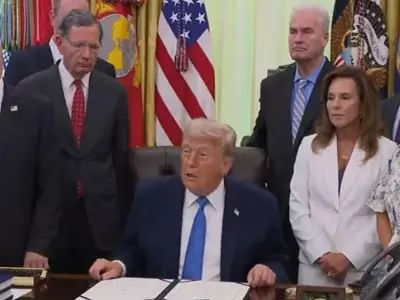
The military action followed a public statement from President Donald Trump, who called for decisive measures against Iranian provocations. President Trump explicitly urged U.S. forces to ensure that any damage inflicted would be "permanent," signaling a firm stance against Iranian military capabilities in the region. This directive appears to have been a key factor in the timing and scale of the operation.

Strategic Implications and Regional Security
The use of 5,000-pound deep penetrator bombs indicates a deliberate effort to neutralize deeply fortified and potentially underground facilities. Such munitions are specifically engineered to penetrate reinforced structures before detonating, maximizing destructive impact on critical infrastructure. This strike represents a clear message from the U.S. regarding its commitment to safeguarding freedom of navigation and countering threats to international commerce.
The broader geopolitical context includes ongoing regional conflicts and proxy engagements, with recent reports highlighting retaliatory actions and claims from various actors. However, this particular U.S. operation focuses squarely on degrading Iranian missile capabilities that directly endanger maritime security in the Persian Gulf.
Analysts suggest that this escalation could have far-reaching consequences for U.S.-Iran relations and regional dynamics, potentially influencing diplomatic efforts and military posturing in the coming weeks. The international community is closely monitoring developments, given the strategic importance of the Strait of Hormuz to global energy markets and economic stability.