

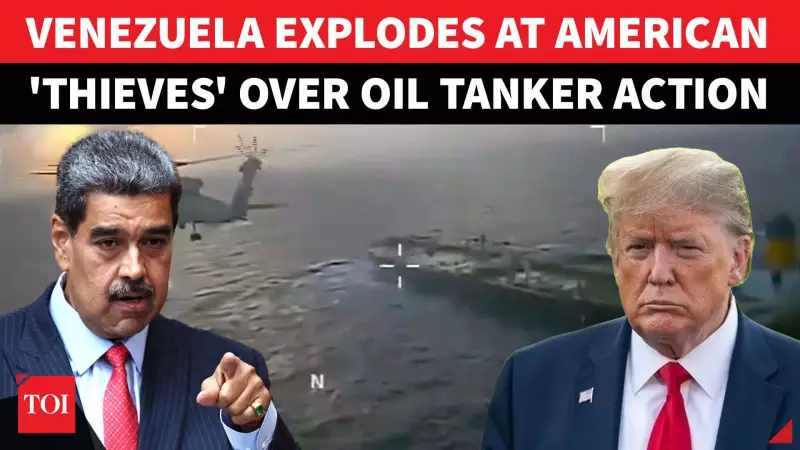
Venezuela has launched a fierce diplomatic offensive against the United States following a dramatic military operation in the Caribbean Sea. The trigger was the seizure of a second oil tanker near the Venezuelan coast by U.S. forces, an act that has sent tensions between the two nations soaring to a new peak.
Caracas Cries Foul: Accusations of Theft and Piracy
The government of President Nicolás Maduro has responded with blistering rhetoric, labeling the American action as nothing short of "theft," "hijacking," and "international piracy." Officials in Caracas are framing the incident not as an isolated event, but as a calculated move in a broader campaign. They allege that Washington's ultimate goal is to loot Venezuela's vast oil resources and engineer the destabilization of Maduro's administration.
This latest seizure, which occurred on December 21, 2025, marks a significant and dangerous escalation in a long-running and volatile standoff. It demonstrates a willingness by the United States to intensify military pressure in the region, a strategy it is pursuing despite growing murmurs of international criticism.

A Defiant Washington and the Path to the UN
Across the geopolitical divide, the United States has remained defiant in the face of Venezuela's accusations. The Biden administration has not publicly detailed its full legal justification for the raid but appears steadfast in its current course of action. This hardening of positions transforms the bilateral spat into a potential flashpoint with wider implications.
As the war of words intensifies, the crisis is now heading toward the United Nations, where both nations are expected to plead their cases before the global community. This diplomatic battlefield risks morphing into a full-blown geopolitical showdown, drawing in other nations and testing the limits of international law concerning maritime seizures and sanctions enforcement.
Broader Context and Regional Implications
The tanker seizure did not happen in a vacuum. It is the latest and most aggressive chapter in a saga of sanctions, counter-accusations, and power plays. For Venezuela, its oil exports are the economic lifeblood of the nation, and any threat to that revenue stream is viewed as an existential challenge to the state.
For the United States and its allies, the actions are likely framed within the context of enforcing sanctions regimes and curtailing the Maduro government's financial avenues. However, the method of a direct military interception in waters close to Venezuela is seen as profoundly provocative. The situation creates a precarious scenario for the entire Caribbean region, which could be caught in the crossfire of a major power dispute.
The world now watches to see if the UN can mediate a de-escalation or if the standoff will harden further, risking unintended consequences and a new front in an ongoing economic and political war.






