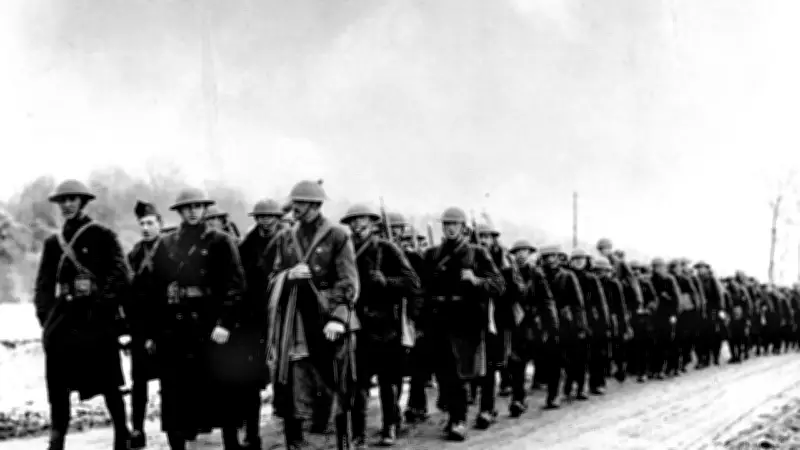
The First World War: A Global Transformation of Warfare
The First World War, spanning from 1914 to 1918, fundamentally altered the nature of global conflict by spreading fighting across continents, seas, and the air. Governments mobilized industry, technology, and entire populations on an unprecedented scale, setting the stage for modern warfare. This conflict divided nations into two primary blocs: the Allies, initially led by France, Britain, Italy, and Russia, with the United States joining later, and the Central Powers, led by Germany, Austria-Hungary, and the Ottoman Empire. Japan aligned with the Allies to seize German possessions in the Pacific, while numerous smaller countries chose sides based on strategic interests.
The Human and Strategic Costs of the War
The Allies ultimately emerged victorious, largely due to the decisive entry of the United States in 1917, which provided critical manpower and resources that the Central Powers could not match. In terms of human toll, the First World War was the most destructive conflict in history until the Second World War. Approximately 10 million soldiers lost their lives, with an additional 20 million suffering serious injuries or disabilities. Civilian deaths, though harder to quantify, resulted from shelling, bombing, disease, hunger, industrial accidents, and executions, highlighting the war's widespread impact on societies.
Technological Innovations and Weapons Development
The war spurred scientific and technological innovation at an extraordinary pace, leading to more lethal and effective weapons on both sides. Advances were made in communications, medicine, and transportation, though not all innovations proved successful or had the intended impact. In terms of firearms, armies utilized a range of rifles, with each major power fielding its own standard weapon. Allied forces relied on rifles such as the British Lee-Enfield, the French Lebel and Berthier, Italy's Carcano, Russia's Mosin–Nagant, and the US Springfield 1903. The Central Powers used weapons including Austria-Hungary's Steyr–Mannlicher, Germany's Mauser, and Turkey's Mauser variants. Notably, the American Springfield rifle was based on a bolt-action design similar to Germany's Mauser, leading the US government to pay licensing fees to the German company until it entered the war.

The Rise of Machine Guns and Mortars
Most machine guns employed during the First World War were based on Hiram Maxim's 1884 design, capable of firing 450 to 600 rounds per minute, which gave defenders a devastating advantage against attacking troops. Mortars also evolved rapidly, becoming more powerful and effective than earlier versions. Britain introduced the Stokes mortar in 1915, a simple design capable of firing up to 22 shells per minute over a range of about 1,200 yards. Germany developed the Minenwerfer, or "mine thrower," which fired large shells packed with metal fragments, enhancing battlefield destruction.
Poison Gas and Its Lasting Impact
Poison gas was first deployed on a large scale during the First World War in April 1915, when German forces released chlorine gas near Ypres. Other nations soon developed their own chemical agents, including mustard gas, which caused severe lung damage and painful skin blistering. While gas attacks resulted in relatively few deaths, they disabled large numbers of soldiers and spread fear across the battlefield. Chemical weapons were banned under international law after the war, but they have been used in later conflicts, such as the Iran–Iraq War in the 1980s, underscoring their enduring legacy.
The Introduction of Tanks and Armored Warfare
Tanks were introduced during the First World War as breakthrough weapons designed to overcome the stalemate of trench warfare. The term "tank" originated from the British, who developed these armored vehicles in secrecy. Simultaneously, France created the Renault FT, featuring a rotating turret that significantly influenced modern tank design. Germany developed its own armored vehicle only after Britain and France deployed tanks, producing the A7V, a large but unwieldy machine that resembled a moving building more than a modern fighting vehicle.

Expansion of Air Warfare and Combat
Air warfare expanded dramatically during the First World War as aircraft transitioned from reconnaissance roles to combat missions. Planes were later equipped with machine guns, and a system developed by Anthony Fokker allowed weapons to fire through spinning propellers, turning aircraft into effective combat platforms. Early aircraft were constructed from wood, fabric, and wire, flying at speeds of about 100 mph in 1914, with speeds increasing significantly by the war's end. Multi-engine bombers were also developed, including Germany's Zeppelin-Staaken R.VI, which could carry large bomb loads over long distances, including missions against London.
Undersea Warfare and Submarine Development
Submarines were developed by several countries before the First World War, but they became closely associated with Germany during the conflict. The Imperial German Navy used U-boats to challenge Britain's naval dominance, developing longer-range submarines and improving torpedoes. U-boats attacked ships with torpedoes and deck guns, often surfacing within convoys before striking and diving. After the war, there were attempts to ban submarine warfare, similar to efforts to prohibit chemical weapons, but these initiatives ultimately failed, leaving a lasting impact on naval strategies.