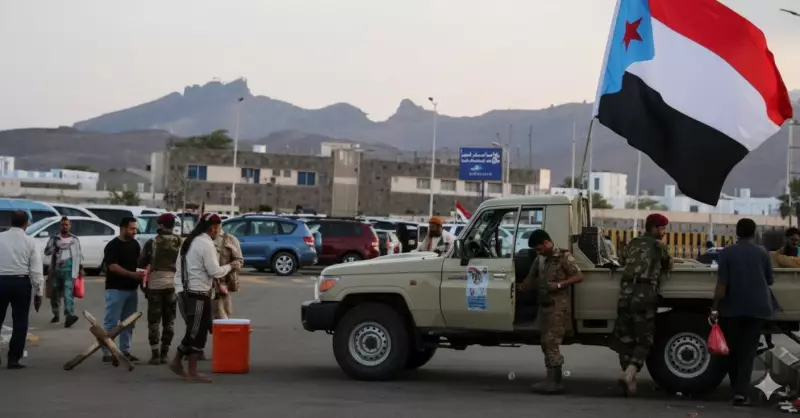
In a significant escalation of Yemen's complex civil war, the internationally recognised government backed by Saudi Arabia announced on Friday, January 2, 2026, the launch of a military operation aimed at reclaiming positions from the UAE-supported Southern Transitional Council (STC) in the crucial Hadramout province. This move starkly highlights the deepening rift between the Gulf powerhouses, Saudi Arabia and the United Arab Emirates, who back opposing factions in the conflict.
Operation 'Homeland Shield' and the Battle for Control
The government, based in Aden, stated that its forces had initiated what it initially termed a "peaceful" operation named "Homeland Shield." The objective is to retake military camps and restore state authority in the oil-producing eastern province. Salem Ahmed Saeed al-Khunbashi, the Saudi-backed governor of Hadramout, was appointed as the overall commander of the operation, granted full military, security, and administrative powers.
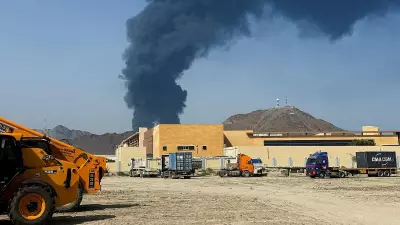
Governor al-Khunbashi announced that government forces successfully seized control of the al-Khasha'a military camp, describing it as the largest and most important base in Hadramout. He emphasised in a televised speech on Yemen TV that this was "not a declaration of war," but an effort to prevent these camps from being used to threaten security and to protect the province from chaos.

Dispute and Denials: Airstrikes and Accusations
However, the STC strongly contested the government's narrative of a peaceful operation. Amr Al Bidh, a senior STC official, told Reuters that Saudi Arabia "knowingly misled the international community." He claimed that just minutes after the announcement, Saudi-backed forces launched seven airstrikes, three of which targeted the al-Khasha'a camp itself.
"The operation had not been peaceful," Al Bidh stated firmly. Saudi Arabia did not provide an immediate comment regarding the alleged airstrikes. The situation on the ground remained tense, with STC spokesperson Mohammed al-Naqeeb warning on social media platform X that their forces were on full alert and prepared to respond forcefully.
Broader Gulf Rift and Regional Implications
This military confrontation is a direct manifestation of the growing divergence between Saudi Arabia and the UAE, once close partners in regional security. The tensions have been simmering since December, when the STC, with Emirati support, took control of large parts of southern Yemen from the recognised government—a move viewed as a direct threat by Riyadh.
The rift widened last week when the UAE announced it was withdrawing its remaining forces from Yemen after Saudi Arabia backed a call for their departure within 24 hours. Hadramout holds particular significance for Saudi Arabia, both for its oil resources and its cultural-historical ties, with many prominent Saudi families tracing their origins to the province.
Separately, a diplomatic row flared when Saudi Arabia's ambassador to Yemen, Mohammed Al-Jaber, accused STC leader Aidarus Al-Zubaidi of refusing to allow a plane carrying a Saudi delegation to land in Aden on Thursday, leading to a suspension of flights. The STC countered by accusing Riyadh of imposing an air blockade.
This escalation risks further destabilising Yemen and complicates efforts for a broader peace. Additionally, as key members of OPEC+, the public disagreement between Saudi Arabia and the UAE could spill over into oil policy decisions, affecting global energy markets. The situation in Hadramout remains fluid, marking a dangerous new chapter in Yemen's long-running war.