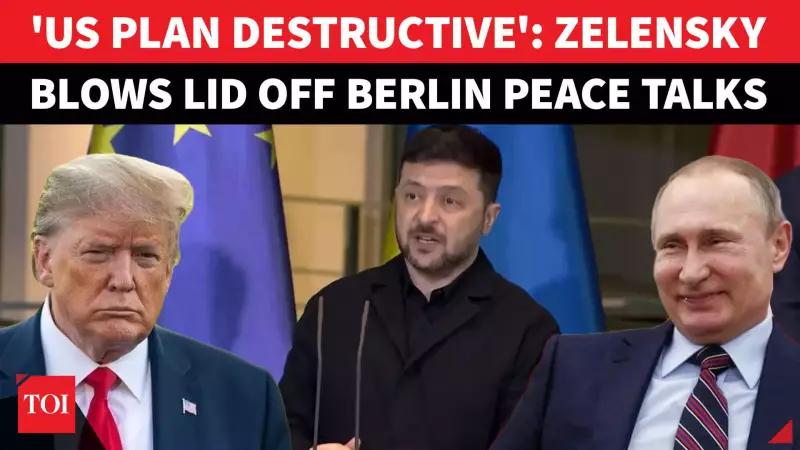
Ukrainian President Volodymyr Zelensky has publicly acknowledged a significant policy divergence with the United States regarding potential territorial concessions to Russia, even as international diplomatic efforts to end the conflict intensify. This admission came following two days of high-stakes discussions in Berlin, aimed at finding a pathway to peace.
Berlin Talks Highlight Unbridgeable Gap on Territory
Speaking to reporters after the talks concluded on December 15, 2025, Zelensky confirmed that the issue of Ukrainian land was discussed extensively. However, he made it unequivocally clear that Ukraine's sovereign position remains unchanged. "There has been extensive discussion on territorial issues," Zelensky stated, adding that even if allies have now fully heard Kyiv's views, the fundamental stance of his government has not shifted.
This declaration underscores the persistent and deep divisions that exist, particularly with Washington, on the core question of what a peace settlement might entail. The comments are widely seen as an indirect but firm rejection of peace proposals floated by former US President Donald Trump and others, which have suggested compromises on territory as a means to end the war.

Push to Unlock Frozen Russian Assets for Defence
Alongside his defence of Ukraine's borders, President Zelensky renewed a critical financial demand from Western allies. He called for frozen Russian assets to be fully utilised for Ukraine's defence. This plea comes at a crucial time, as the European Union debates a controversial and complex plan to unlock tens of billions of euros worth of these immobilized funds to provide sustained support for Kyiv.
The EU's internal debate on the matter is fraught, with some member states expressing legal and economic reservations. Zelensky's push from Berlin adds significant political pressure, framing the use of these assets as essential for Ukraine's survival and ability to resist Russian aggression on the battlefield.
Implications for Future Diplomacy and War
The outcome of the Berlin talks and Zelensky's subsequent statements paint a picture of a diplomatic process facing severe headwinds. The clear divergence with a key ally like the United States on the fundamental issue of territory suggests that a negotiated end to the war remains a distant prospect. Zelensky's posture indicates that Kyiv is not prepared to trade land for peace, setting a hard boundary for all future negotiations.
Furthermore, the parallel focus on Russian assets highlights the growing financial dimension of the conflict. Ukraine's long-term defence strategy appears increasingly tied to the West's willingness to legally repurpose Moscow's own funds, marking a new frontier in economic warfare and international law. The coming weeks will reveal whether the EU can bridge its own divisions to deliver on this front, even as the political divide on territory persists.