

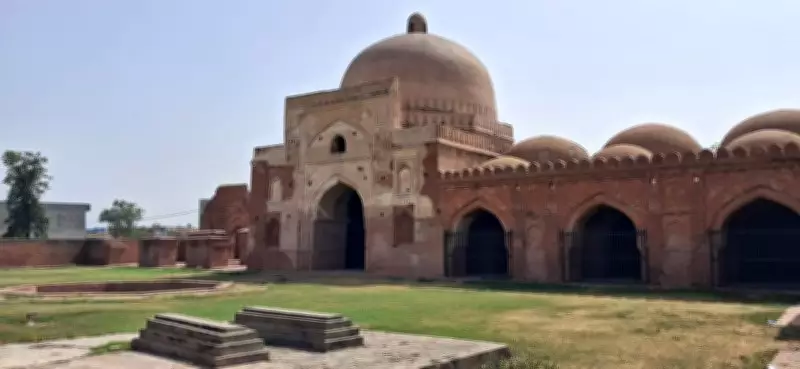
The Kabuli Bagh Mosque, a historic monument in Panipat, Haryana, built by Mughal emperor Babur in 1527 to commemorate his victory over the Afghans, now stands in a state of disrepair. The mosque, located within the Kabuli Bagh garden complex, bears the scars of time with crumbling walls, faded inscriptions, and overgrown vegetation.
Historical Significance
The mosque is named after Babur's wife, Kabuli Begum, and is one of the earliest Mughal architectural remnants in India. It features a blend of Persian and Indian styles, with intricate carvings and a large prayer hall. The garden surrounding it was laid out by Babur himself, reflecting his love for nature.
Current Condition
Today, the mosque's minarets are cracked, the dome shows signs of weathering, and the original paint has largely peeled off. Local historians lament the lack of maintenance by the Archaeological Survey of India (ASI), which has listed the site as a protected monument. Visitors report that the area is often littered with garbage, and the once-beautiful garden is now unkempt.

Why It Matters
Heritage experts emphasize that the mosque is not only a religious site but also a symbol of India's syncretic culture. Its deterioration reflects a broader neglect of historical monuments across the country. Calls for restoration have grown louder, with activists urging the government to allocate funds for conservation.
Despite its condition, the mosque still attracts tourists and history enthusiasts. However, without immediate intervention, this piece of Mughal heritage may be lost forever. The ASI has yet to announce any concrete restoration plans, leaving the future of the Kabuli Bagh Mosque uncertain.

