

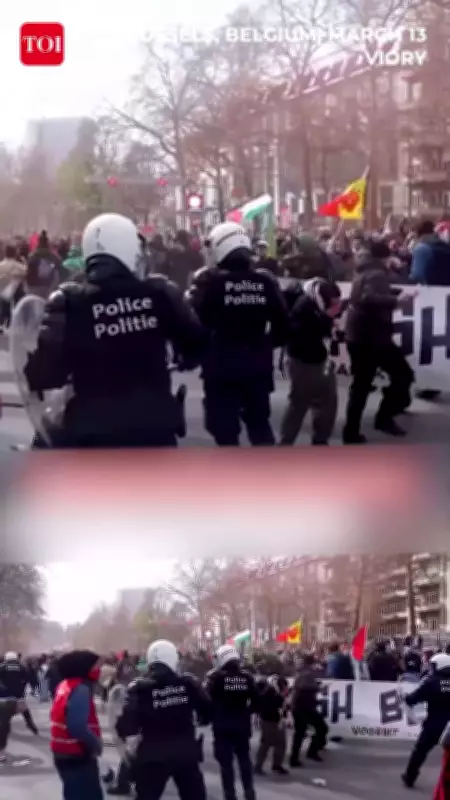
Violent Clashes Erupt Outside EU Headquarters in Brussels Amid Mass Protests
In a dramatic escalation of tensions, violent clashes erupted outside the European Union headquarters in Brussels, Belgium, as scores of protesters gathered to voice their opposition to the bloc's policies. The demonstration, which saw a significant turnout, quickly turned chaotic, leading to confrontations with law enforcement and multiple arrests.
Protesters Rally Against EU Policies
The protest was organized by groups critical of various European Union directives and regulations, which they argue negatively impact national sovereignty and economic stability. Participants, carrying banners and chanting slogans, demanded a reevaluation of key EU policies, including those related to immigration, trade, and environmental standards.
Police were forced to intervene as the situation deteriorated, with protesters attempting to breach security barriers near the EU buildings. Tear gas and water cannons were reportedly deployed to disperse the crowds, resulting in injuries on both sides. Authorities have confirmed that several individuals were detained during the clashes, though exact numbers remain undisclosed.

Impact on Brussels and EU Operations
The unrest caused significant disruptions in the heart of Brussels, with traffic halted and nearby businesses forced to close temporarily. EU officials have condemned the violence, emphasizing the importance of peaceful dialogue in addressing policy concerns. "While we respect the right to protest, such actions undermine the democratic processes we uphold," stated an EU spokesperson.
This incident highlights growing discontent within some member states over EU governance, reflecting broader debates on integration and autonomy. Analysts suggest that such protests could influence upcoming EU summits and policy discussions, as leaders grapple with balancing unity and national interests.
Broader Context of European Unrest
These clashes in Brussels are part of a wider trend of protests across Europe, where citizens are increasingly mobilizing against perceived overreach by supranational institutions. Similar demonstrations have occurred in countries like France and Germany, driven by issues ranging from economic austerity to climate policies.
- Increased Security Measures: In response to the violence, Belgian authorities have heightened security around EU institutions, deploying additional police units to prevent future incidents.
- Calls for Reform: Protest leaders are urging the EU to adopt more transparent and inclusive decision-making processes to address public grievances effectively.
- International Reactions: The clashes have drawn attention from global media, with observers noting the potential implications for EU cohesion and international relations.
As investigations into the clashes continue, the EU faces mounting pressure to engage with dissenting voices and reassess its policy frameworks to mitigate further unrest. The events in Brussels serve as a stark reminder of the challenges in maintaining harmony within the diverse bloc.

