

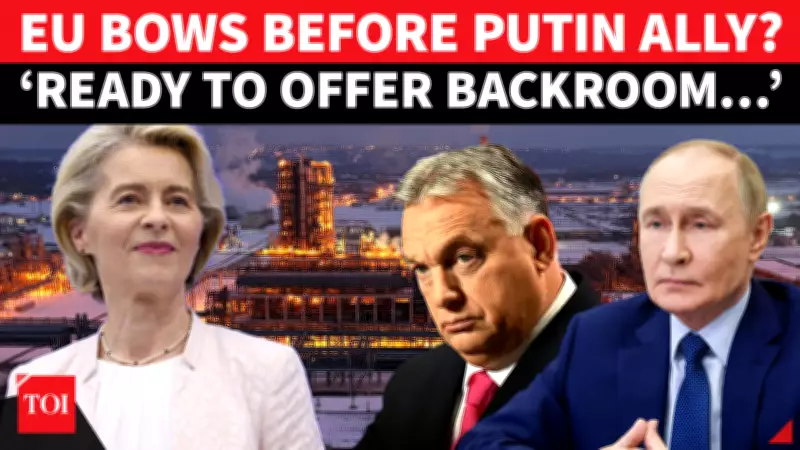
EU Faces High-Stakes Standoff Over Russian Oil and Ukraine Aid
The European Union finds itself in a precarious position as tensions escalate over energy supplies and financial support for Ukraine. Hungarian Prime Minister Viktor Orban has taken a firm stance, refusing to approve a crucial €90 billion EU loan package intended for Ukraine unless his demands for Russian oil imports are met.
Orban's Unyielding Demands and the Druzhba Pipeline
At the heart of the conflict is Orban's insistence on maintaining access to Russian oil through the Druzhba pipeline. This demand puts him at odds with broader EU efforts to reduce dependence on Russian energy following geopolitical conflicts. Orban's move effectively holds the substantial Ukraine aid hostage, creating a significant roadblock in EU solidarity efforts.
As Ukraine's war chest faces potential depletion due to the delayed funds, Brussels is under immense pressure to resolve the impasse. The situation highlights a stark contrast between energy security concerns and the collective support for Ukraine, forcing EU diplomats into a delicate balancing act.

Diplomatic Maneuvers and Potential Compromises
Reports suggest that EU officials are actively exploring backroom negotiations to broker a compromise. The proposed deal aims to offer Orban a "face-saving" victory, potentially allowing limited Russian oil imports while securing the release of the Ukraine loan. This strategy reflects the EU's attempt to navigate between diplomatic pragmatism and principled defiance against Russian influence.
The standoff has drawn widespread attention across the continent, with many viewing it as a test of EU unity and resilience. Orban's unwavering position, coupled with the EU's apparent willingness to bend, underscores the complex interplay of national interests and collective goals within the bloc.
Broader Implications for EU Cohesion and Global Politics
This development raises critical questions about the future of EU decision-making and its ability to present a united front on international issues. The outcome could set a precedent for how the bloc handles internal dissent while addressing external challenges like the conflict in Ukraine.
With billions of euros and strategic energy policies hanging in the balance, the resolution of this standoff will likely have far-reaching consequences. It may influence not only EU-Russia relations but also the stability of support for Ukraine during a critical period in the ongoing conflict.
The situation continues to evolve, with stakeholders closely monitoring negotiations. The EU's response to Orban's demands will be a key indicator of its capacity to manage crises that pit member state sovereignty against collective action and solidarity principles.

