

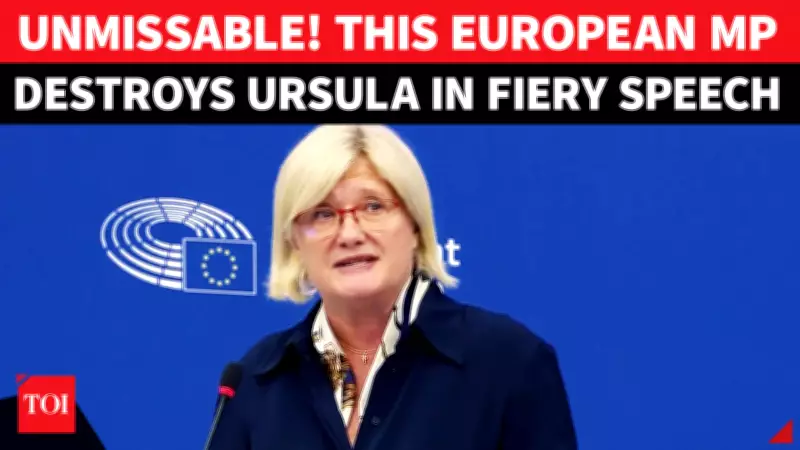
EU Parliamentarians Launch Scathing Critique of Union's Core Policies
In a striking display of internal dissent, prominent members of Europe's right-wing political bloc have unleashed a vehement critique against the European Union, leveling accusations of hypocrisy and inconsistent standards across key policy areas. The criticism, voiced by senior figures, targets migration management, financial commitments related to Ukraine, and the contentious Mercosur trade agreement, highlighting growing tensions within the bloc.
Migration and Sovereignty at the Forefront of Dispute
Jordan Bardella, president of France's National Rally, and Kinga Gál, vice-president of the Patriots for Europe, articulated deep concerns over EU actions they claim jeopardize national autonomy and regional stability. Gál specifically condemned a substantial €90 billion loan package approved by the EU, arguing it imposes unsustainable debt on future generations. Additionally, she criticized Spain's recent initiative to regularize undocumented migrants, warning that such measures expose the Schengen area to increased instability and security risks.
Bardella echoed these sentiments, advocating for stricter limitations on free movement within the EU. He asserted that this privilege should be reserved exclusively for EU citizens, emphasizing a need to reinforce borders and control migration flows more rigorously. Both leaders framed these issues as fundamental threats to the sovereignty of member states, accusing Brussels of overreach and disregard for national interests.

Economic Pressures and Trade Deal Controversies
The criticism extended to economic policies, with both figures lambasting the Mercosur trade agreement between the EU and South American nations. They warned that this pact poses a severe threat to European farmers by introducing unfair competition and could exacerbate existing distrust in EU institutions. Amid rising economic and political pressures, Bardella and Gál argued that such deals undermine the bloc's credibility and fail to address the needs of its agricultural sector.
Their remarks reflect broader anxieties within right-wing circles about the EU's direction, particularly in handling global challenges and internal cohesion. The leaders highlighted how these policies, in their view, contribute to a cycle of debt accumulation and erode public confidence in European governance structures.
Implications for EU Unity and Future Governance
This public rebuke from within the right-wing bloc signals potential fractures in EU solidarity as the union navigates complex issues like migration reform, financial aid distribution, and international trade negotiations. The accusations of double standards suggest a deepening ideological divide that could influence upcoming European elections and policy debates.
As the EU faces mounting scrutiny from both internal and external critics, the statements by Bardella and Gál underscore the urgent need for dialogue and reassessment of strategies to maintain stability and trust among member states and citizens alike.

