

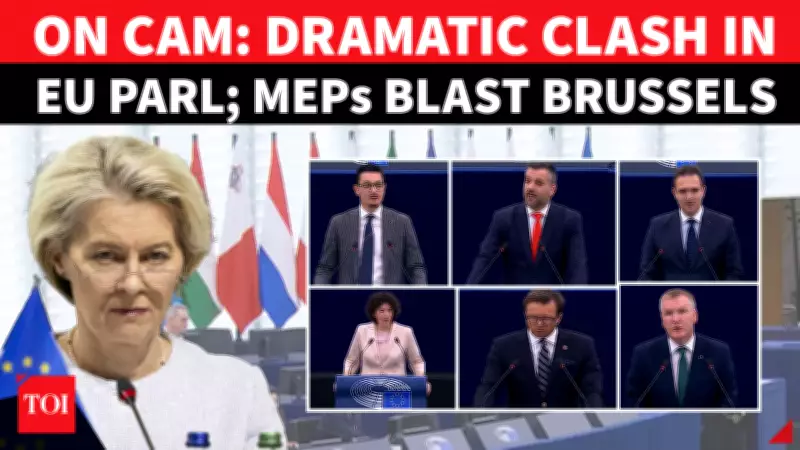
EU Parliament Erupts As Slovakia Faces Brussels' Rule Of Law Crackdown
The European Union is facing a significant internal crisis as tensions escalate between Brussels and Slovakia over fundamental democratic principles. The European Commission has formally opened an infringement procedure against Slovakia, marking a critical juncture in the bloc's ongoing struggle to uphold the rule of law among its member states.
Brussels Sounds Alarm On Slovakia's Democratic Backsliding
In a decisive move, Brussels has issued a stern warning to Slovakia, highlighting that recent legal reforms implemented by Prime Minister Robert Fico's government pose a severe threat to the nation's democratic foundations. The European Commission's comprehensive 2025 Rule of Law Report documents limited progress in protecting judicial independence and raises serious concerns regarding amendments to criminal law that could significantly hinder investigations into high-level corruption cases.
The report explicitly states that these reforms risk eroding judicial independence, weakening crucial anti-corruption safeguards, and imposing restrictive measures on media freedom and civil society organizations. This assessment has placed Slovakia under intense scrutiny, positioning it at the center of a broader debate about democratic values within the European Union.

European Parliament Descends Into Heated Confrontation
The release of the report has ignited a fiery debate within the European Parliament, where political factions are trading sharp accusations. Critics of the Slovak government have launched vehement attacks, accusing Prime Minister Fico's administration of systematically drifting toward authoritarianism and undermining the core principles upon which the EU was founded.
In a forceful counterattack, supporters of the Slovak government and other skeptical voices have fired back, alleging that the European Union is strategically weaponizing rule-of-law mechanisms and financial instruments to interfere in the sovereign political affairs of member nations. This confrontation has created a deeply polarized atmosphere, with parliamentarians engaging in passionate exchanges over the appropriate balance between national sovereignty and collective European standards.
Infringement Procedure Sets Stage For Deeper Clash
The European Commission has initiated a formal infringement procedure specifically targeting Slovakia's whistleblower protection laws, which Brussels contends are inadequate and fail to meet EU standards. This legal action represents more than a bureaucratic step; it symbolizes a fundamental clash over the future direction of the European Union itself.
The standoff between Brussels and Bratislava is increasingly framed as a battle over competing visions of democracy, national sovereignty, and the extent of the EU's authority to enforce common values. As the procedure advances, it sets the stage for potentially more severe consequences, including financial penalties and further political isolation, should Slovakia refuse to align its laws with EU expectations.
Broader Implications For European Unity
This confrontation occurs against the complex backdrop of the ongoing Russia-Ukraine war, which has already strained European unity and tested the bloc's cohesion. The dispute with Slovakia highlights deeper fractures within the EU, where eastern and western member states sometimes hold divergent views on governance, sovereignty, and the interpretation of democratic norms.
Observers note that the outcome of this clash could establish important precedents for how the EU manages internal dissent and enforces its foundational principles. The situation raises critical questions about whether the bloc can maintain unity while respecting national differences, or if such conflicts will lead to further fragmentation at a time when geopolitical challenges demand collective strength.
The European Parliament continues to debate the matter vigorously, with no immediate resolution in sight. The coming months will likely see intensified diplomatic efforts, legal maneuvers, and political negotiations as both sides seek to defend their positions in this high-stakes confrontation over the very soul of European democracy.

