

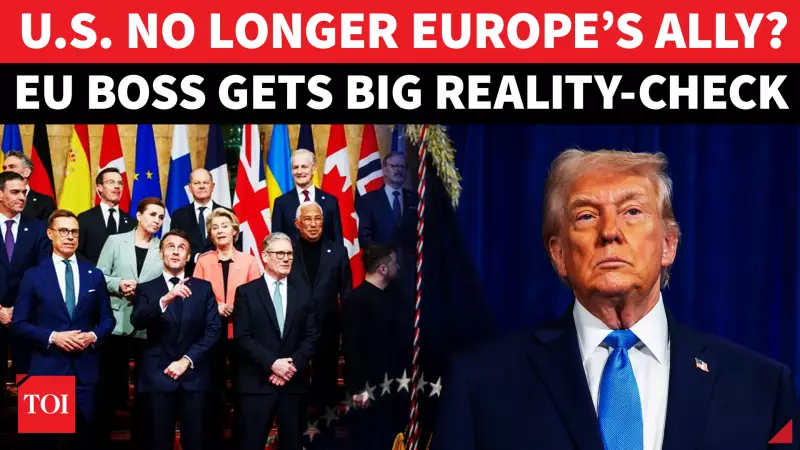
In a dramatic and urgent intervention, the European Union's former top diplomat has declared that the era of automatic transatlantic solidarity is over. Josep Borrell, who served as the EU's High Representative for Foreign Affairs, has called on European leaders to fundamentally reassess their relationship with the United States and urgently build their own independent defence capabilities.
The Core of Borrell's Warning: A Relationship Transformed
Borrell's warning, issued on January 7, 2026, is not based on a single incident but a cascade of fractures. He points to a series of deep-seated issues that have collectively reshaped the alliance. These include escalating tensions over digital regulations and tech sovereignty, where US and EU interests increasingly clash.
More pointedly, he highlights the imposition of U.S. visa bans on European officials, a move seen as deeply disrespectful among EU capitals. Washington's unilateral military actions abroad, undertaken without full consultation with NATO partners, have also raised alarms. Perhaps most symbolically, Borrell cited former President Donald Trump's controversial remarks on Greenland, which hinted at territorial ambitions and shocked European sensibilities.

"The transatlantic relationship has fundamentally changed," Borrell argues, stating that the assumptions underpinning post-war European security are no longer valid.
A Call for European "Strategic Autonomy"
Borrell's central message is a clarion call for self-reliance. He urges European leaders to "wake up" and face the new geopolitical reality. Instead of depending on American military protection through NATO, Europe must invest heavily in strengthening its own defence industry and strategic decision-making framework.
This concept, often termed "strategic autonomy," involves the EU developing the capacity to act independently in foreign policy, security, and defence. It means building a European pillar within NATO that is robust enough to stand alone if necessary. Borrell's comments suggest that the US security guarantee, once considered ironclad, is now viewed as conditional and potentially unreliable.
Sparkling a Continent-Wide Debate
The former foreign policy chief's stark assessment has ignited fresh and intense debate across Europe. The discussion revolves around three critical pillars:
- Sovereignty: To what degree is Europe truly in control of its own destiny?
- Security: How can it guarantee the safety of its citizens in an unstable world?
- The Future of NATO: Can the alliance adapt to this new dynamic, or will it become obsolete?
These questions are no longer theoretical. Borrell's intervention places them at the centre of political discourse, forcing leaders in Berlin, Paris, and other capitals to formulate concrete answers. The push for a more militarily capable and politically united Europe is likely to gain significant momentum following this high-profile warning from a seasoned diplomatic insider.
The call to action is clear: Europe must invest in its own future and cannot afford to base its security on the shifting political winds of Washington. The continent's leaders are now faced with the monumental task of turning this vision of autonomy into a practical reality.

