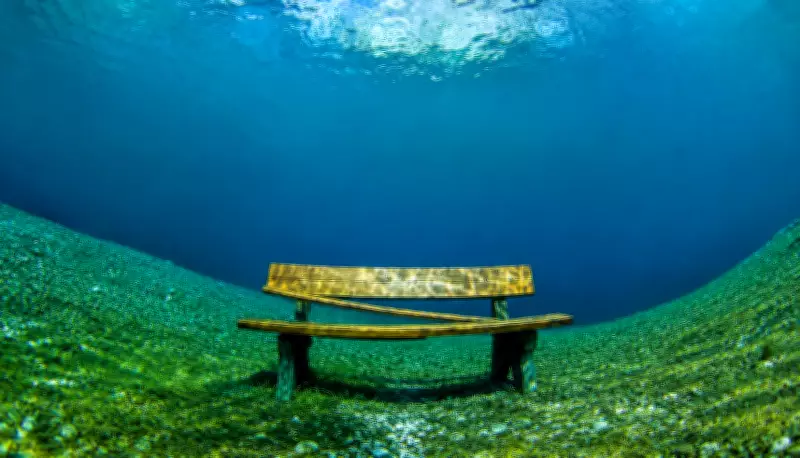
For much of the year, visitors to Austria's Green Lake can walk along quiet trails, sit on wooden benches and enjoy a peaceful alpine landscape surrounded by forests and mountains. Then spring arrives, and the scene begins to transform. As snow melts in the nearby Hochschwab Mountains, crystal-clear water pours into the basin, gradually swallowing the meadows, pathways and park furniture. Within weeks, what looked like an ordinary park lies beneath up to 39 feet of emerald-green water. Benches appear to rest on the lake floor, footpaths vanish beneath the surface and entire sections of woodland become submerged, creating one of Europe's most extraordinary seasonal spectacles.
Why This Austrian Park Disappears Beneath 39 Feet of Water Every Spring
Green Lake, or Grüner See, is located near the village of Tragöß-Sankt Katharein in Austria's Styria region. Nestled at the foot of the Hochschwab mountain range, it is not a conventional lake that remains the same throughout the year. Instead, it undergoes a dramatic annual transformation driven almost entirely by nature.
During winter and early spring, the basin contains relatively little water. The surrounding meadows function like a normal recreational area where locals and visitors can walk through the landscape. By late spring, however, melting snow from the mountains begins flowing downhill, rapidly increasing the lake's size and depth.

The phenomenon is the result of seasonal snowmelt rather than heavy rainfall or human intervention. As temperatures rise, water accumulated in the mountains during winter rushes into the basin below. The influx is so significant that the lake can reach depths of around 12 metres, or roughly 39 feet. Walking paths, small bridges, grassy fields and benches are gradually submerged. Unlike many flooded areas, however, Green Lake's remarkable clarity allows these features to remain visible beneath the surface. The result is a scene that often appears digitally altered in photographs, even though it is entirely natural.
Why the Water Looks Almost Unreal
One of the reasons Green Lake became famous around the world is the extraordinary clarity of its water. Fed primarily by fresh snowmelt, the lake contains very little sediment. Combined with the surrounding limestone geology, this creates visibility that can extend dozens of metres under favourable conditions. Sunlight passing through the water gives the lake its distinctive emerald-green appearance. On calm days, submerged benches, pathways and trees can be seen with astonishing clarity, creating the impression of an underwater park frozen in time.
The Underwater Attraction That Drew Divers from Across the World
Long before social media made the lake famous, Green Lake had become a favourite destination for divers. Images of people swimming above submerged benches and pathways spread across travel websites and photography forums, turning the location into an international curiosity. For divers, the attraction was obvious. Few places offered the chance to explore what looked like an ordinary park transformed into an underwater landscape. The photographs were often striking enough to leave viewers wondering whether they were real. As the lake's popularity grew, so did visitor numbers.
Why Diving and Swimming Were Eventually Banned
The very popularity that made Green Lake famous also created environmental concerns. Increased diving activity began disturbing sediments and affecting the delicate ecosystem. To protect the lake, local authorities introduced restrictions on water activities. Diving, swimming and boating have been prohibited since 2016. While some visitors were disappointed by the decision, conservationists argued that preserving the lake's unique environment was more important than maintaining its status as a diving destination. Today, the lake is best appreciated from its shoreline and surrounding hiking trails.

A Rare Disappearance Shocked Locals in 2025
Green Lake's annual flooding is so reliable that many residents consider it a natural certainty. That is why events in 2025 attracted widespread attention. Following an unusually dry winter with limited snowfall, local reports indicated that the lake completely dried up in early April. Observers noted that such a disappearance had not been seen in decades. The event highlighted just how dependent the phenomenon is on mountain snowpack and seasonal weather conditions. Although Green Lake remains one of Austria's most remarkable natural attractions, the episode served as a reminder that even long-established natural cycles can be influenced by changing environmental conditions.
A Place That Exists in Two Worlds
For a few weeks each year, Green Lake occupies a space somewhere between a park and a lake. Visitors arriving in winter encounter grassy paths and open meadows. Those who come in late spring find a landscape transformed into an underwater world of submerged benches, flooded trails and emerald water. It is this brief and dramatic transformation that continues to fascinate travellers, photographers and nature enthusiasts. Few places on Earth demonstrate the power of seasonal change quite so vividly. One season reveals a tranquil alpine park. The next hides it beneath nearly 39 feet of crystal-clear water.