

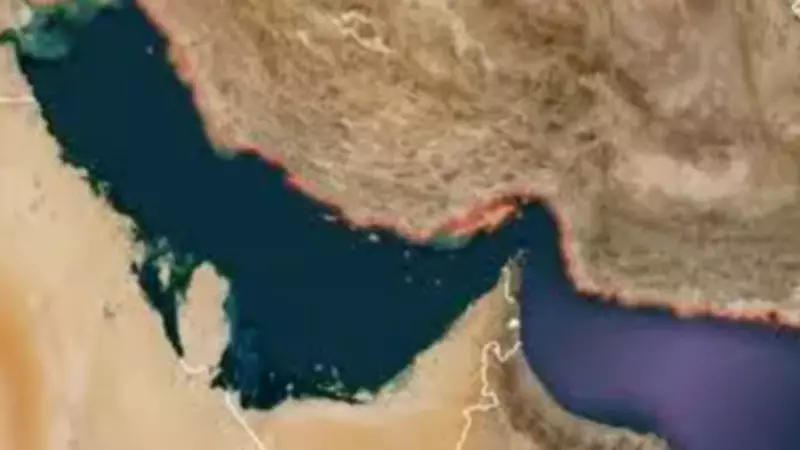
NEW DELHI: Amid the ongoing blockade of the Strait of Hormuz and the resultant spike in crude oil prices, the Indian Navy has made public its maritime security strategy. Released recently by Navy chief Admiral D K Tripathi, the document identifies the Strait of Hormuz as a "primary area" of interest, alongside other critical maritime chokepoints.
Maritime Chokepoints in the Indian Ocean Region
Maritime chokepoints in the Indian Ocean Region (IOR) constitute critical nodes that exert disproportionate influence over global trade and energy security. Such chokepoints in the IOR include the Cape of Good Hope, Mozambique Channel, Bab-el-Mandeb, Suez Canal, Strait of Hormuz, Malacca and Singapore Straits, Sunda Strait, Lombok Strait, Ombai Strait, and Wetar Strait. The Straits of Malacca and Singapore link the Indian Ocean to the South China Sea and Pacific Ocean, providing the shortest sea route from the Persian Gulf to East Asia and the West Pacific regions.
The Sunda Strait serves as an alternative route to Malacca and Singapore, being 50 nautical miles (nm) long and 15 nm wide at its north-east entrance. However, large ships do not prefer passage through this strait due to navigational hazards, depth restrictions, and strong currents. The Ombai Strait lies between the islands of Alor and Timor, while the Wetar Strait lies between the islands of Timor and Wetar. Due to the distance, routing through this area as an alternative to the Malacca and Singapore straits is not normally preferred.

Expanding Maritime Interests
As India’s economic and strategic engagements across oceans expand, the range and intensity of external influences impacting national interests are expected to grow significantly in the coming years. This requires the Indian Navy to operate across an expanding geographical canvas. As a result, the entire maritime domain beyond the Primary Area of Maritime Interest is designated as a ‘secondary’ area of maritime interest, the document stated.
Primary Areas of Maritime Interest
On the list of the Indian Navy’s primary areas of maritime interest are:
- India’s coastal areas and maritime zones
- The Arabian Sea, Bay of Bengal, Andaman Sea, Laccadives Sea, and their littoral regions
- Persian Gulf region and its littoral
- Gulf of Oman, Gulf of Aden, Red Sea, and their littoral regions
- South-west Indian Ocean, including IOR island nations therein and east coast of Africa littoral regions
- Chokepoints leading to, from, and across the Indian Ocean, including the six-degree channel, 8/9-degree channels
- Straits of Hormuz, Bab-el-Mandeb, Malacca, Singapore, Sunda, Lombok, and Ombai-Wetar
- The Mozambique Channel and the Cape of Good Hope and their littoral regions
- Other areas encompassing our sea lines of communication and international sea lanes and vital energy and resource interests
Energy and Economic Security
Beyond energy, the maritime domain is the primary conduit for imports critical to India’s food security, public health, and industrial capacity. India met 73% of its fertiliser requirements through domestic production in the year 2025. Yet, as the world’s second-largest fertiliser consumer, India remained import-dependent for muriate of potash (MOP) and significantly reliant on overseas sources for diammonium phosphate (DAP). Approximately 16 million tonnes of edible oil is imported annually by sea. India’s maritime leverage, infrastructure, and sea-based activities are the principal drivers for its economic growth and prosperity, the document concluded.

