

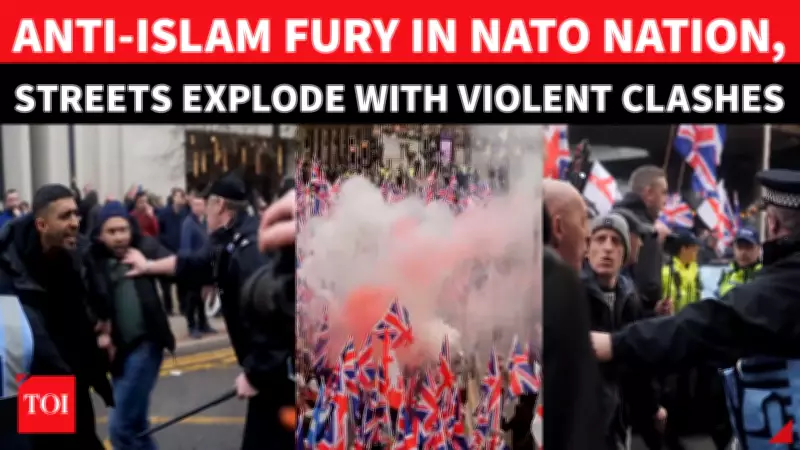
Manchester Descends Into Chaos as Far-Right March Triggers Violent Confrontations
Tensions reached a boiling point in Manchester on February 21, 2026, as a far-right anti-immigration demonstration organized by the group Britain First spiraled into violent street battles with counterprotesters. The controversial "March for Remigration" drew thousands of participants demanding stricter immigration controls and deportations, while simultaneously mobilizing large numbers of anti-fascist activists who rallied in opposition to what they described as hateful rhetoric.
Police Forced to Intervene as Scuffles Erupt Across City Centre
As rival demonstrators converged in Manchester's urban core, physical altercations broke out between opposing factions, escalating into fistfights and chaotic scuffles that overwhelmed public spaces. Law enforcement authorities were compelled to deploy significant resources to separate the clashing groups, with officers forming cordons and implementing crowd control measures to prevent further violence from spreading through the city's streets.
Dispersal Orders and Multiple Arrests Made
Manchester police imposed formal dispersal orders across affected areas, granting officers expanded authority to clear gatherings and restore public order. Several individuals were arrested on charges related to public disorder offenses as authorities worked to contain the volatile situation. The police operation focused on de-escalating tensions between the far-right marchers and counterprotesters who had assembled from various activist networks.

Counterprotest Movement Unites Diverse Groups
The opposition to Britain First's demonstration brought together a broad coalition including:
- Stand Up To Racism activists who organized resistance to what they termed xenophobic policies
- Members of the Green Party of England and Wales advocating for migrant rights and multicultural values
- Former Labour leader Jeremy Corbyn who addressed the gathering with calls for social unity
Corbyn specifically warned against scapegoating migrants for broader social and economic challenges, emphasizing solidarity across communities. The counterprotest movement framed their mobilization as a defense of inclusive values against what they characterized as divisive nationalist rhetoric promoted by Britain First and similar organizations.
Broader Context of Immigration Debates
The Manchester violence reflects deepening societal divisions around immigration policy in the United Kingdom, with far-right groups increasingly organizing public demonstrations to push for restrictive measures while progressive organizations mount coordinated opposition. The "remigration" concept promoted by Britain First represents one of the most extreme positions in these debates, advocating for forced repatriation of immigrants alongside stringent border controls.
This incident follows a pattern of heightened political polarization around migration issues across Europe, with similar confrontations having occurred in other urban centers. The Manchester clashes demonstrate how immigration policy disagreements can rapidly escalate into physical confrontations when opposing groups directly confront each other in public spaces.
Authorities continue to monitor the situation as community leaders call for dialogue and de-escalation following one of Manchester's most significant protest-related disturbances in recent years.

