

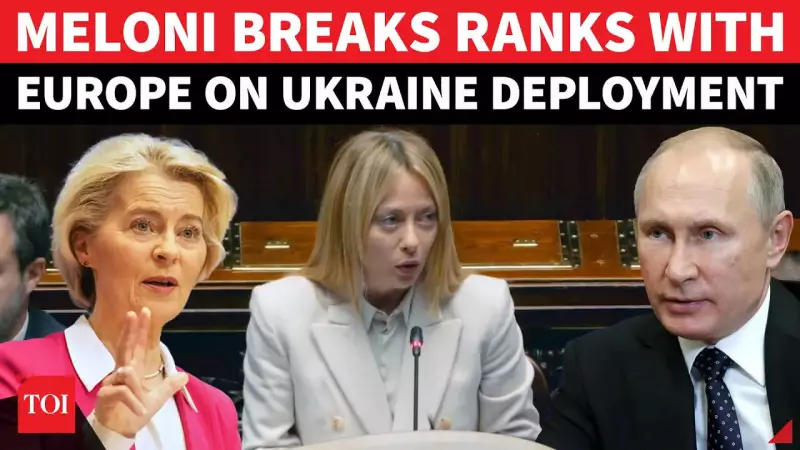
In a move highlighting potential fractures within European consensus, Italian Prime Minister Giorgia Meloni has firmly stated that Italy will not be deploying its military forces to Ukraine. The declaration was made during an address to the Italian parliament in Rome on Wednesday, December 18, 2024.
Meloni's Parliamentary Address and Berlin Summit
Prime Minister Meloni used her parliamentary speech to reiterate a clear national position on the ongoing conflict. She referenced her participation in a significant diplomatic gathering held in Berlin on Monday evening. That summit saw the presence of Ukrainian President Volodymyr Zelenskyy, several other European leaders, and American negotiators Steve Witkoff and Jared Kushner.
Meloni described the atmosphere at the Berlin meeting as "constructive and united," a point she emphasized was worth noting. She indicated that the discussions culminated in a final declaration by the European leaders. According to Meloni, this document incorporated all the key priorities that Italy has championed throughout the challenging months of the war.

Italy's Consistent Stance and Its Implications
The Italian leader's statement underscores a deliberate and consistent foreign policy line from Rome. She connected her recent parliamentary comments to the talks she had with President Zelenskyy during his official visit to Rome the previous Tuesday. By refusing to commit troops, Italy, under Meloni's leadership, is charting a distinct course that prioritizes diplomatic and political support over direct military intervention.
This position arrives amidst heightened tensions and explicit warnings from Russia against deeper NATO involvement. Meloni's refusal to send troops marks a notable instance of a major European power publicly breaking ranks on the sensitive issue of troop deployment, even as it expresses solidarity with Ukraine in other forms.
Wider Context and Global Reactions
The development occurs against a backdrop of other international pressures. Notably, the news segment referencing Meloni's speech also included a warning from Brazilian President Lula to European leaders like France's Macron and Italy's Meloni regarding a trade deal, suggesting a complex global landscape where the Ukraine war intersects with broader economic diplomacy.
While the European declaration from Berlin aimed to present a united front, Italy's specific caveat on troop deployment reveals the underlying negotiations and differing national risk assessments within the bloc. The move is likely to be closely analyzed in other European capitals and in Washington, as it touches upon the core question of how far Western allies are willing to go in their support for Kyiv.
Meloni's firm stance sets a clear boundary for Italy's involvement and may influence debates in other nations cautious about escalation. It reaffirms that, despite a "constructive and united" diplomatic dialogue, concrete military commitments from European nations remain a deeply sovereign and divisive issue.

