

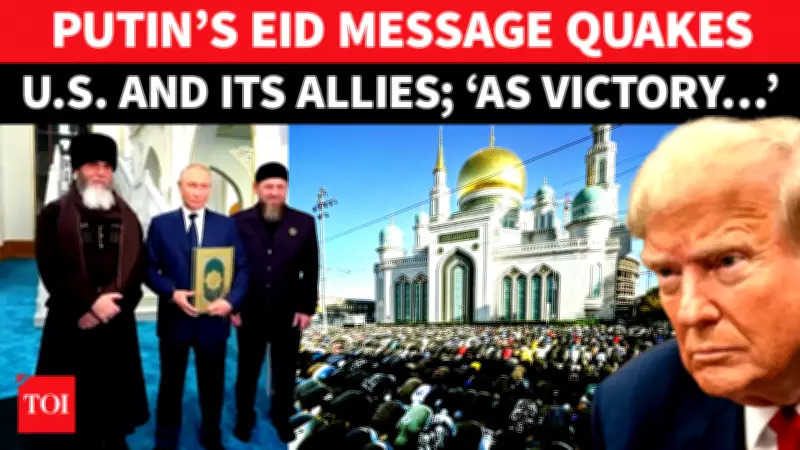
Russian President Vladimir Putin extended Eid al-Adha greetings to Muslims across Russia on May 27, 2026, praising the community for its patriotism, charity, and contribution to the country’s social harmony. In his message, Putin stated that the Islamic festival reconnects believers with the values of kindness, justice, and piety. He lauded Muslim organisations for strengthening family values, educating youth, carrying out charitable work, and supporting Russian soldiers and their families. The message is seen as part of the Kremlin’s broader outreach toward Russia’s large Muslim population and Moscow’s growing engagement with the Islamic world amid rising geopolitical tensions.
Putin’s Acknowledgment of Muslim Contributions
The Russian leader specifically thanked Muslims for their support of the country’s defenders. “Thank you for supporting the defenders of the Fatherland,” Putin said, underscoring the role of the Muslim community in bolstering national morale. He highlighted their charitable activities and dedication to social causes, which he said strengthen the fabric of Russian society.
Broader Geopolitical Context
This outreach comes at a time when Russia is deepening ties with Islamic nations, partly to counterbalance Western sanctions and isolation. The Kremlin has increasingly positioned itself as a defender of traditional values, resonating with conservative Muslim populations both domestically and abroad. Putin’s message also aligns with Russia’s efforts to present itself as a multi-ethnic, multi-faith nation where Islam is respected.

- Muslims make up around 10-15% of Russia’s population, with significant communities in Tatarstan, Bashkortostan, and the North Caucasus.
- Islamic festivals like Eid al-Adha are publicly recognized, and Putin regularly sends greetings to mark such occasions.
- The message follows recent diplomatic engagements with countries like Saudi Arabia, Iran, and Turkey.
Reactions and Implications
Analysts view Putin’s Eid message as a strategic move to solidify domestic unity and project soft power in the Islamic world. By emphasizing shared values and gratitude for military support, the Kremlin aims to rally patriotic sentiment among Muslim citizens. The gesture also contrasts with perceived Western hostility toward Islam, reinforcing Russia’s image as a protector of religious freedoms.
In related news, Turkish President Recep Tayyip Erdogan also used Eid prayers to criticize Israeli Prime Minister Benjamin Netanyahu, while other global events highlighted ongoing tensions in the Middle East. Russia’s outreach to Muslims remains a key pillar of its foreign policy, especially as it seeks allies in regions like Africa and Asia.

