

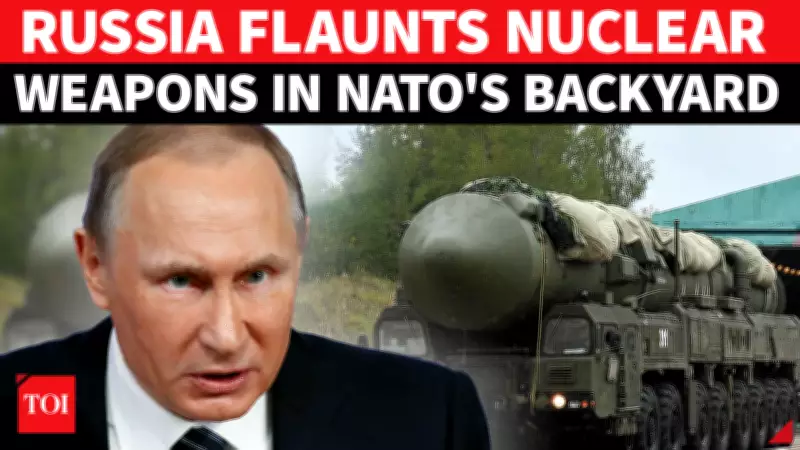
Russia and Belarus have initiated large-scale nuclear exercises in close proximity to NATO borders, escalating tensions between Moscow and the Western alliance. The drills, which began on May 22, 2026, involve the deployment of nuclear munitions into Belarus and the demonstration of advanced weaponry including hypersonic missiles, submarines, and strategic bombers.
Details of the Drills
The exercises are part of a coordinated military effort by Russia and Belarus to showcase their strategic capabilities. According to reports, Russian President Vladimir Putin has ordered the activation of nuclear deterrent forces, moving nuclear warheads to storage facilities in Belarus. The drills also feature the deployment of 64,000 troops, missile systems, and nuclear-capable bombers near the Baltic region.
Rising Baltic Tensions
The military maneuvers come amid heightened tensions in the Baltic Sea area, where NATO has increased its presence. Recent incidents include drone accusations and near-collisions between Russian fighter jets and UK spy planes. The drills have sparked fears of a wider confrontation between Russia and the West, with NATO officials expressing concern over the proximity of nuclear exercises to allied territory.

International Reactions
The United States and its NATO allies have condemned the drills as provocative and destabilizing. In response, NATO has reinforced its eastern flank with additional troops and equipment. Meanwhile, Russia has defended the exercises as defensive in nature, citing the need to counter perceived threats from the alliance.
Broader Context
The nuclear drills are the latest in a series of escalatory moves by Russia, including the deployment of hypersonic missiles and strategic bombers. The exercises also coincide with rising tensions over Iran and other global hotspots, further complicating international security dynamics.
As the situation develops, world leaders are calling for de-escalation and dialogue to prevent any miscalculation that could lead to a broader conflict.

