

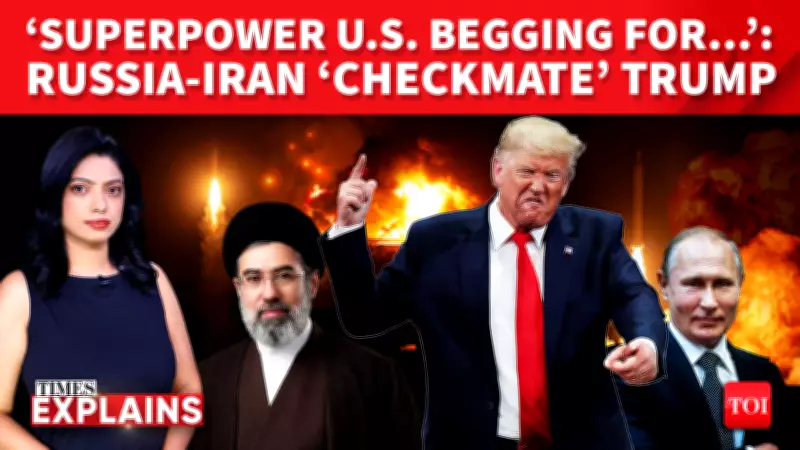
The growing power alignment between Iran and Russia is intensifying pressure on the United States, exposing cracks in America's long-standing global dominance. Once able to shape world events through military and economic force, Washington now faces a more complex and unpredictable global order. The Iran crisis, the Russia-Ukraine war, and rising multipolar tensions are testing U.S. influence, alliances, and strategic reach.
Washington's Overstretch
Under Trump-era policies, questions are emerging about overstretch, fading deterrence, and shifting global trust. The world may be entering a new era in which American control is no longer absolute. The alignment between Moscow and Tehran has created a formidable axis that challenges U.S. interests across multiple theaters, from the Middle East to Eastern Europe.
Military and Diplomatic Pressure
Recent incidents, including Iran's downing of a U.S. MQ-9 Reaper drone over the Strait of Hormuz and Russia's continued offensive in Ukraine, underscore the diminishing capacity of the United States to project power unilaterally. Analysts suggest that the U.S. is being forced into a reactive posture, scrambling to contain crises rather than shaping outcomes.

Global Trust Eroding
Allies and adversaries alike are recalibrating their strategies as American commitments appear less reliable. The Trump administration's transactional approach to foreign policy has further eroded trust, with nations like Saudi Arabia and Pakistan distancing themselves from U.S.-led initiatives such as the Abraham Accords. The world is witnessing a shift toward a multipolar system where no single power holds sway.
What Lies Ahead
As the Russia-Iran partnership deepens, the United States faces critical choices: either adapt to a new global reality or risk further marginalization. The era of unchallenged American hegemony appears to be drawing to a close, replaced by a landscape of competing powers and complex alliances.

