

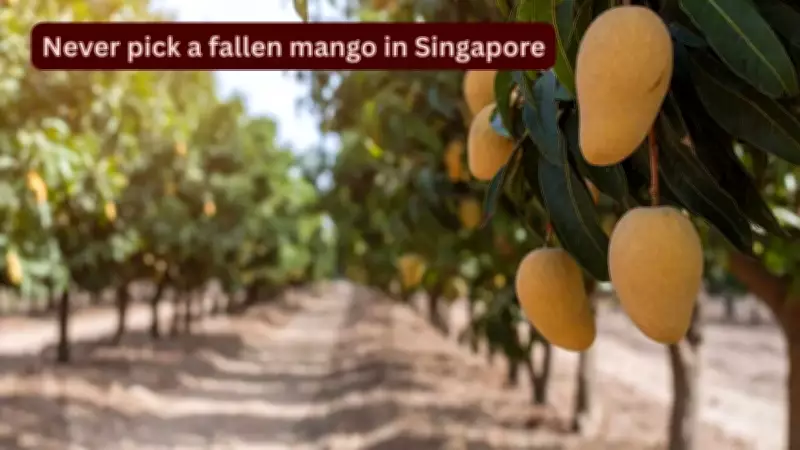
If you ever spot a mango lying on the ground in Singapore, think twice before picking it up. What may seem like a harmless travel moment can actually lead to serious legal troubles, including hefty fines. As a first-time visitor, you might not be aware of Singapore's unique 'mango laws.' It is strange but true: Singapore is one of the few countries that enforces bans on edible items such as chewing gum and durians, the world's smelliest fruit. However, many travelers are unaware of the strict fines, rules, and regulations related to mangoes. If you are visiting for the first time, it is essential to know these rules.
What Happens When You Pick a Fallen Mango?
The Ministry of National Development (MND) explains on its website: 'Trees, including their fruit, which are located on State land belong to the State. NParks manages most of the trees on State land. Members of the public who wish to pluck fruit from trees, or collect fruit that has dropped from trees on State land should approach NParks for permission. Those who pluck or collect fruit in a public park without permission can be fined up to $5,000 under the Parks and Trees Act. Those who do so in a nature reserve or a national park can be fined up to $50,000, and/or imprisoned for up to 6 months.'
This clearly means that mangoes hanging from roadside trees, inside parks, or even lying on the ground are not free for anyone to take.

What Happens If You Ignore the Rule?
Singapore is strict when it comes to enforcing these rules:
- Individuals could face fines of up to S$5,000 (approximately ₹363,000 to ₹374,000).
- In protected zones, penalties can soar to S$50,000 (₹12,50,000 to ₹12,56,000).
- In severe cases, jail time of up to six months may be imposed.
Not Even Fallen Fruit Is 'Free'
Yes, you read that correctly. This is where most travelers get caught off guard. In many countries, fruit lying on the ground can be picked and eaten without concern. But not in Singapore. Even fallen mangoes have rules. Picking one up without permission is considered an offense. The logic is simple: the fruit is still part of a managed ecosystem and public resource.
What Travelers Should Know
For those visiting Singapore, it is important to know that whether it is a mango, rambutan, or any other fruit:
- Do not pluck from the tree.
- Avoid picking up fallen fruits.
- Never attempt to climb trees.
- If you are curious, seek permission from NParks (though it is rarely granted for casual visitors).
Are Mangoes Allowed Into Singapore?
According to the Singapore Food Agency (SFA), travelers can bring a small and reasonable quantity of all fruits and vegetables, for example not more than 5 kg as a general guide, from any country into Singapore for private consumption. So the answer is yes, they are allowed, but in limited quantities and for personal consumption only. The key requirement is 'small, reasonable quantities.' You can carry a few mangoes for yourself or family, which is generally acceptable. However, the fresh produce must be declared at customs upon arrival. Singapore has strict biosecurity laws to prevent pests and diseases. Failure to declare food items can result in confiscation, monetary fines, and penalties. Selling is not permitted.
Final Advice for Travelers
So, travelers, beware of a fallen fruit when you are in Singapore. Resist the urge to grab it. What you can do instead is look, smile, take a picture, then say your goodbye and move on. But please do not pick it up.

