

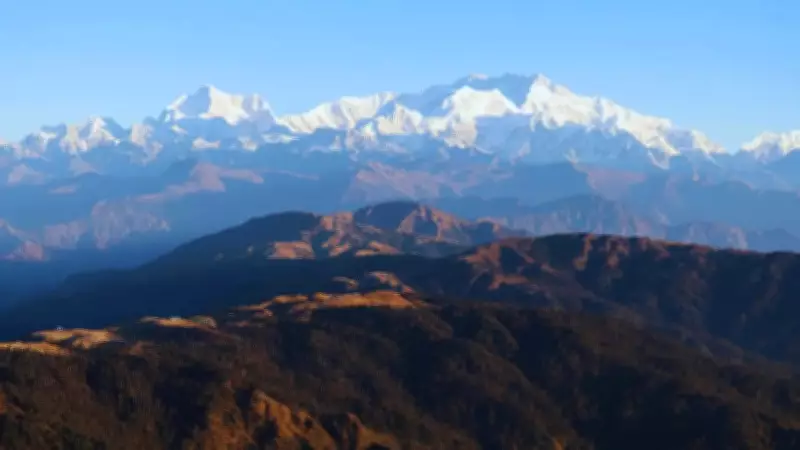
The Himalayas are home to countless breathtaking sights, but few are as captivating as the "Sleeping Buddha." Unlike a single peak, this remarkable formation is created by several mountains of the Kanchenjunga massif that together outline a reclining Buddha in peaceful slumber. Tourists visiting the Himalayan region are treated to an awe-inspiring view that blends natural beauty with spiritual symbolism.
A Mountain Range That Resembles a Human Form
The illusion arises from the alignment of multiple peaks, including Kanchenjunga and nearby ranges. Collectively, they form the silhouette of a reclining figure. The head is believed to be Kumbhakarna (also known as Jannu), while Kanchenjunga forms the chest. The remaining peaks shape the body and legs. The effect is most striking at dawn, when sunlight bathes the snow-covered mountains in hues of gold, pink, and orange, creating a magical panorama.
Why It Is Called the Sleeping Buddha
For Buddhists in Sikkim and the Eastern Himalayas, this formation is more than a geological curiosity. It is seen as a representation of Buddha at rest, eternally meditating in serenity and harmony. The connection between Buddhism and these mountains spans centuries, with locals regarding the peaks as living protectors rather than mere natural structures. Thus, the Sleeping Buddha is deeply woven into the cultural fabric of the region.

Best Viewpoints to Witness the Formation
Several locations offer excellent views of the Sleeping Buddha, with the town of Pelling in Sikkim providing a central vantage point. Other notable spots include:
- Darjeeling
- Tiger Hill
- Gangtok
- Ravangla
- Yuksom
Among these, Tiger Hill near Darjeeling is the most famous, where the sun rises directly behind the formation, enhancing its silhouette.
Ideal Visiting Times
The best visibility occurs between October and December, after the monsoon season clears the air. Spring (March to May) also offers spectacular views, though clouds are more frequent. Photographers should aim for sunrise, as by mid-morning, clouds often obscure parts of the mountains.
A Natural Phenomenon
Visitors can marvel at nature at its finest—no artificial structures are involved. The mountains have naturally aligned to create an image that generations have interpreted as divine. The Sleeping Buddha stands as a testament to the harmony between nature and spirituality.

