

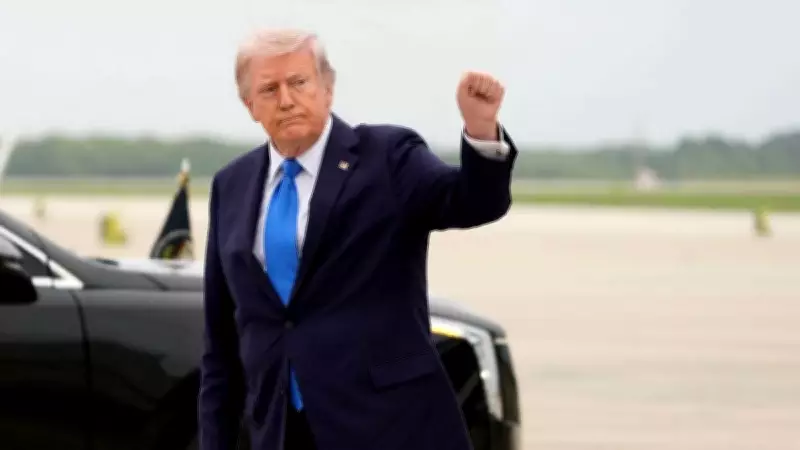
U.S. President Donald Trump has defended his decision to cancel a special envoy's trip to Pakistan, which was intended to facilitate peace talks with Iran. Trump stated that while the offer made to Pakistan was significant, it did not meet the necessary criteria for proceeding with the diplomatic mission.
Background of the Canceled Trip
The envoy, whose identity has not been disclosed, was scheduled to travel to Pakistan to engage in discussions aimed at reducing tensions between the United States and Iran. The trip was part of broader efforts to find a diplomatic solution to the ongoing conflicts in the region.
Trump's Justification
In a series of statements, Trump emphasized that the United States had offered a lot to Pakistan but that the offer was not enough to warrant the envoy's visit. He did not provide specific details about what was offered or what was expected in return. The President's remarks suggest a strategic recalibration of U.S. foreign policy towards both Pakistan and Iran.

Implications for U.S.-Pakistan Relations
The cancellation of the envoy's trip may strain relations between the United States and Pakistan, which have been complex and often fraught with mistrust. Pakistan has historically played a role in facilitating talks between the U.S. and militant groups, but its influence over Iran is limited.
Reactions from Pakistan and Iran
Pakistani officials have expressed disappointment over the canceled trip, noting that they were prepared to host the envoy. Iranian authorities have not officially commented on the development, but analysts suggest that Tehran may view the cancellation as a missed opportunity for dialogue.
Broader Context of U.S.-Iran Tensions
The decision comes amid heightened tensions between the U.S. and Iran, particularly over Iran's nuclear program and its involvement in regional conflicts. The Trump administration has pursued a policy of maximum pressure on Iran, which includes economic sanctions and military posturing. However, there have also been intermittent efforts to engage in diplomacy, often through third-party intermediaries like Pakistan.
- The canceled trip was seen as a potential step towards de-escalation.
- Trump's comments indicate a preference for a more hardline approach.
- The future of U.S.-Iran talks remains uncertain.
Expert Analysis
Foreign policy experts have weighed in on the development, with some arguing that the cancellation could undermine U.S. credibility as a negotiating partner. Others suggest that Trump's stance is consistent with his transactional approach to foreign policy, where concessions must be reciprocal.
- Credibility concerns: Allies may question U.S. commitment to diplomacy.
- Strategic ambiguity: The lack of clear demands from the U.S. complicates negotiations.
- Regional dynamics: Pakistan's role as a mediator may be diminished.
In conclusion, President Trump's defense of canceling the envoy's trip to Pakistan highlights the challenges of navigating complex international relations. While the administration remains committed to its policy towards Iran, the path to peace talks appears fraught with obstacles. The coming weeks will reveal whether alternative diplomatic channels can be established or if tensions will escalate further.

