

Soft Asian Currencies Create Prime Remittance Window for UAE Expatriates
A significant currency shift is unfolding across Asia, presenting a valuable financial opportunity for expatriates working in the United Arab Emirates. The Indian rupee, Pakistani rupee, and Philippine peso are all trading near multi-year lows against the UAE dirham, creating one of the most favorable remittance environments in recent memory. This currency dynamic is prompting thousands of workers in the UAE to reconsider their money transfer strategies to maximize value for families back home.
Current Exchange Rates Paint a Compelling Picture
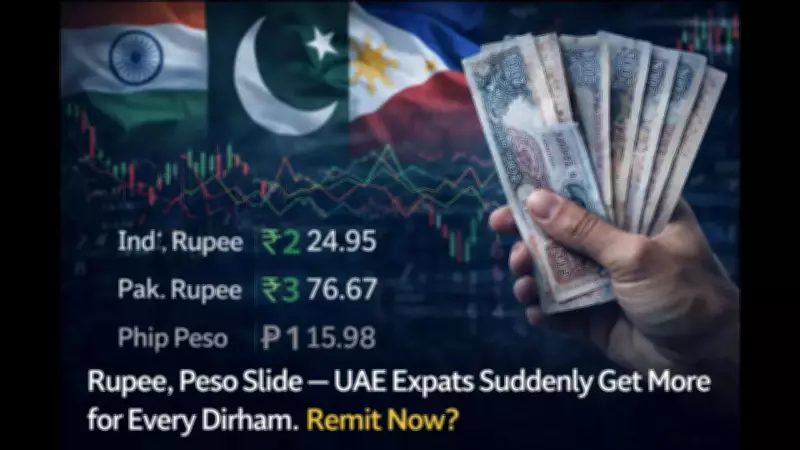
As of late January 2026, exchange rates reveal the extent of this opportunity. The Indian rupee was trading around ₹24.95 per UAE dirham, hovering near its weakest levels in recent years. Simultaneously, the Pakistani rupee remained soft at approximately 76.67 per dirham, while the Philippine peso maintained its position near 15.98 per dirham. This combination of weak Asian currencies and a relatively strong dirham has created a rare window where every dirham sent home stretches significantly further than usual.
Understanding the Currency Weakness Drivers
Currency analysts identify multiple factors contributing to this favorable exchange environment:

- Indian Rupee Pressures: The rupee's relative softness stems from broad global currency pressures, shifting external investor sentiment, and persistent strong dollar dynamics. This weakening trend has persisted for several months, pushing exchange rates toward record lows.
- Philippine Peso Volatility: The peso's recent performance reflects domestic political and economic uncertainty, slower growth indicators, and broader market unease, resulting in noticeable depreciation over recent months.
- Pakistani Rupee Stability at Low Levels: While the Pakistani rupee hasn't experienced dramatic recent drops, it continues to trade near historically weak territory, maintaining steady remittance value for overseas workers.
These movements align with regional patterns where elevated strength in Gulf currencies, particularly the dirham, amplifies cross-border purchasing power for remitters based in the UAE.
Remittance Trends and Economic Impact
The current currency environment isn't an isolated phenomenon. Broader data reveals robust global remittance flows that underpin many developing countries' external spending and household incomes. Pakistan recorded remittance inflows of approximately $3 billion in January 2025, demonstrating sustained year-on-year growth despite domestic macroeconomic pressures. Economists highlight increasing remittance contributions from Gulf nations, with the UAE remaining a key source of foreign exchange for South Asian economies.
These figures underscore how money sent from Gulf expatriates continues to serve as a central pillar of family finances in home countries—a trend that becomes particularly pronounced when currency rates favor senders.
Expert Guidance: Strategic Remittance Approaches
Financial advisors and currency strategists emphasize that while current rates are advantageous, timing and personal financial goals should drive remittance decisions. They recommend several strategic approaches:

- Split Transfer Strategy: Many UAE families are choosing to divide their transfers, sending a portion now to lock in favorable rates while retaining the remainder in case rates weaken further or improve in coming weeks.
- Market Volatility Awareness: Currency markets respond to macroeconomic forces including global interest rates, investor flows, and geopolitical currents. Since predicting short-term moves perfectly is impossible, experts suggest a measured approach rather than remitting all funds at once.
Tailored Advice for Different Expat Communities
Indian Expats: With the rupee near historic lows against the dirham, Indian expatriates are experiencing enhanced purchasing power for every dirham sent home. Local exchange houses report notable increases in remittance volumes coinciding with these weaker rates. Advice: Consider remitting a portion now to secure strong rates, especially for essential expenses like tuition or rent, while monitoring rate movements for additional transfers.
Pakistani Expats: The Pakistani rupee's continued softness offers stable remittance value. Given that remittance inflows already contribute significantly to Pakistan's economy, this trend supports ongoing household and investment needs. Advice: Partial remittances may balance current value with timing risks effectively.
Filipino Expats: The peso's pressure partly originates from domestic economic sentiment. While this weakness creates advantageous sending conditions, volatility tied to political and growth dynamics suggests monitoring near-term trends. Advice: Lock in favorable rates for planned transfers while remaining prepared for possible shifts as domestic factors evolve.
Practical Tips for Smarter Remittance Decisions
Financial specialists recommend these best practices for expatriate remitters:
- Monitor live exchange rates daily before initiating transfers
- Utilize accredited exchange houses or platforms offering competitive rates with low fees
- Consider partial transfers instead of single large lump sums
- Stay informed about macroeconomic announcements that influence forex rates
- Factor in family needs and cash flow timing alongside exchange rate considerations
Cautious Optimism Amid Fluid Currency Trends
Despite current advantages, economists caution that currency trends remain fluid. Factors including global monetary policy shifts, equity market performance, and regional economic developments can influence the rupee or peso in either direction. UAE expatriates are encouraged to maintain flexibility, aligning remittance strategies with long-term financial goals rather than reacting solely to short-term exchange rate movements.
The soft Indian rupee, Pakistani rupee, and Philippine peso against the strong UAE dirham have created an exceptional remittance environment for UAE expats. However, experts consistently stress that timing, partial remittance strategies, and careful planning typically yield better outcomes than attempting to perfectly time currency markets, especially amid uncertain global financial conditions.





