Free Market Forces Drive Iranian Crude Oil Rerouting as UN Faces Diplomatic Impasse
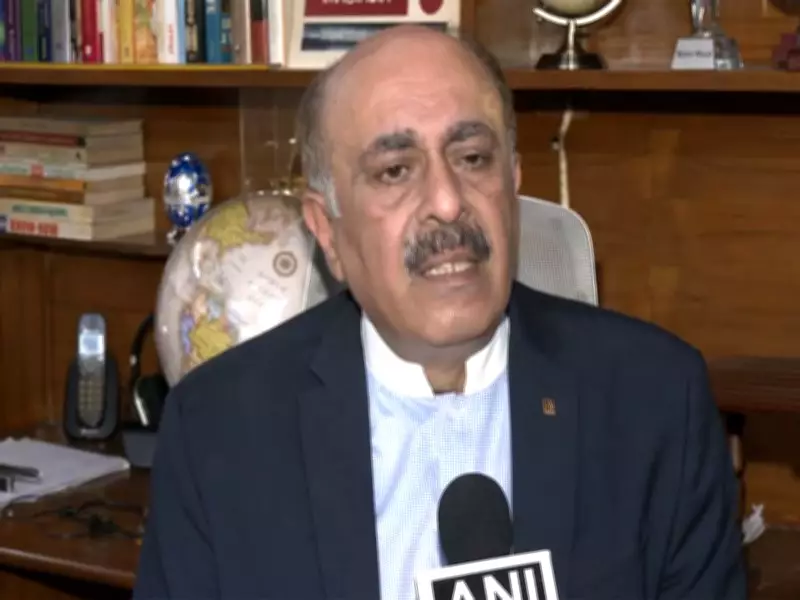
In a significant development in global energy markets, foreign affairs expert Robinder Sachdev has pointed out that free market dynamics are actively playing out behind the scenes of Iranian crude oil rerouting. This situation underscores the complex interplay between economic forces and international diplomacy, with the United Nations currently at an impasse over how to address these maneuvers.
Market Mechanisms and Iranian Oil Flows
Robinder Sachdev, a noted analyst in international relations, emphasizes that the rerouting of Iranian crude is not merely a geopolitical tactic but a reflection of underlying free market principles. As global demand for oil remains robust, market players are finding innovative ways to circumvent restrictions, leveraging price differentials and logistical networks to keep Iranian oil flowing into international markets.
This activity highlights how economic incentives can override political barriers, with traders and shipping companies adapting to sanctions by using indirect routes and opaque transactions. Sachdev notes that this demonstrates the resilience of market forces, even in the face of stringent regulatory frameworks aimed at curbing Iran's oil exports.

United Nations Deadlock on Enforcement
Concurrently, the United Nations is grappling with a diplomatic impasse regarding the enforcement of sanctions and monitoring of Iranian oil shipments. Member states are divided on the appropriate response, with some advocating for stricter measures to curb Iran's nuclear ambitions, while others push for more lenient approaches to maintain global oil supply stability.
Sachdev explains that this deadlock hampers the UN's ability to effectively police the rerouting activities, allowing free market dynamics to flourish unchecked. The lack of consensus among key nations, including permanent members of the Security Council, exacerbates the situation, leading to a fragmented international response that fails to address the core issues.
Implications for Global Energy and Diplomacy
The ongoing rerouting of Iranian crude has profound implications for global energy security and diplomatic relations. On one hand, it ensures a steady supply of oil to markets, potentially stabilizing prices. On the other hand, it undermines international efforts to use sanctions as a tool for political leverage, raising questions about the efficacy of such measures in a globalized economy.
Sachdev warns that this scenario could set a precedent for other nations facing sanctions, encouraging similar evasion tactics. Moreover, the UN's impasse highlights the challenges of multilateral diplomacy in an era where economic interests often clash with political objectives.
Looking Ahead: Challenges and Opportunities
As free market forces continue to shape the flow of Iranian crude, stakeholders must navigate a landscape marked by uncertainty and contention. Key challenges include:
- Enhancing transparency in oil trading to prevent illicit activities.
- Building consensus at the UN to overcome the diplomatic impasse.
- Balancing energy needs with geopolitical strategies to ensure global stability.
Opportunities lie in leveraging this situation to reform international sanctions regimes, making them more adaptive to market realities. Sachdev suggests that a collaborative approach, involving both state and non-state actors, could lead to more effective policies that respect free market principles while achieving diplomatic goals.
In conclusion, the rerouting of Iranian crude oil, driven by free market dynamics, presents a critical test for global governance. With the United Nations stuck in a deadlock, the need for innovative solutions has never been more urgent, as the world watches how economic and political forces will ultimately reconcile in this high-stakes arena.