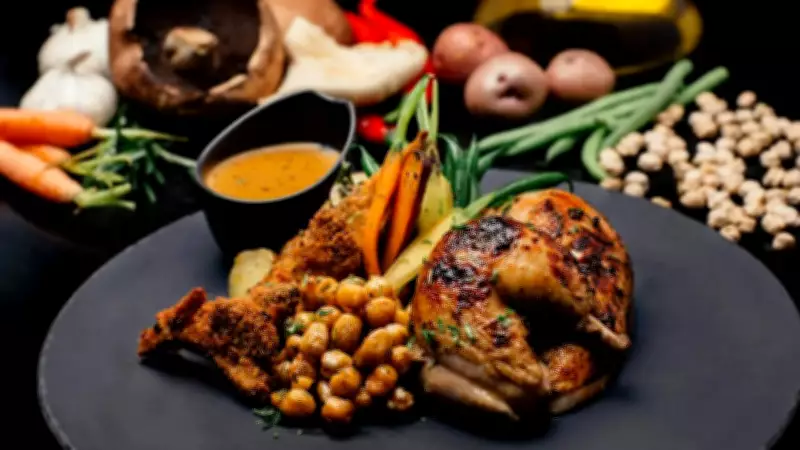
There is nothing quite like a traditional Sunday roast. It is the heart of British comfort food—a plate piled high with meat, golden potatoes, and seasonal vegetables, all in a pool of gravy. But according to a new report from Greenpeace, that wholesome meal hides a chemical-heavy reality, and people are not ready for it. As per recent data, it suggests that the very ingredients making up our national favorite are often saturated with a staggering variety of pesticides.
The Chemical Cocktail on Your Plate
Greenpeace’s analysis of government data from the Food and Environment Research Agency (FERA) reveals that over 100 different pesticides are used on the vegetables typically found in a roast. While we think of these greens as the healthiest part of the meal, they are frequently treated with a complex mix of chemicals during the growing process.
The numbers are eye-opening. Onions and leeks lead the pack with 43 different types of pesticides, closely followed by carrots and parsnips at 40. Even staple sides like potatoes and peas are treated with around 30 different chemicals each. If you are finishing the meal with strawberries, you aren’t escaping the trend; the summer fruit is typically sprayed with 42 different pesticides.

Health and Environmental Risks
The concern isn't just about the quantity but the nature of the chemicals themselves. Of the 102 pesticides identified, seven are already banned in the EU. These include substances like Dimethomorph and Benthiavalicarb, which have been linked to serious health issues, including cancer and reproductive toxicity.
Beyond health, these chemicals are really hurting the British countryside. People who care about the environment are saying that we are using many bad chemicals and they are 'drenching' the land. This is killing bees, birds, and butterflies. It is making the countryside a quiet place. It is making farmers use more and more chemicals. This is expensive. It might make our food systems weaker in the long run.
The Push for Change
Greenpeace is now asking the UK government to do more. The government wants to reduce the use of chemicals by 10 percent by 2030. Greenpeace wants the government to reduce the use of bad chemicals by 50 percent. They think the government should help farmers more so they can use ways to grow food without relying on harmful pesticides.
Defra says that food in the UK is safe to eat. A person from Defra said that there are rules about how many bad chemicals can be used on food. They also said that all food is checked to make sure it is safe. The government has a plan called 'Integrated Pest Management.' This plan helps farmers use ways to keep pests away. For example, farmers can use animals to eat the pests or they can rotate their crops.
A Way Forward
Some farmers in the UK are already showing that we can do things differently. They are not using many bad chemicals and they are finding ways to produce food and help the wildlife at the same time. People who care about the environment are saying that we need to think about what we're putting in our food. We need to think about our health and the environment when we are growing the food we eat on Sundays.