UAE and Bahrain Forge Stronger Economic Bonds with Major Currency Swap Agreement
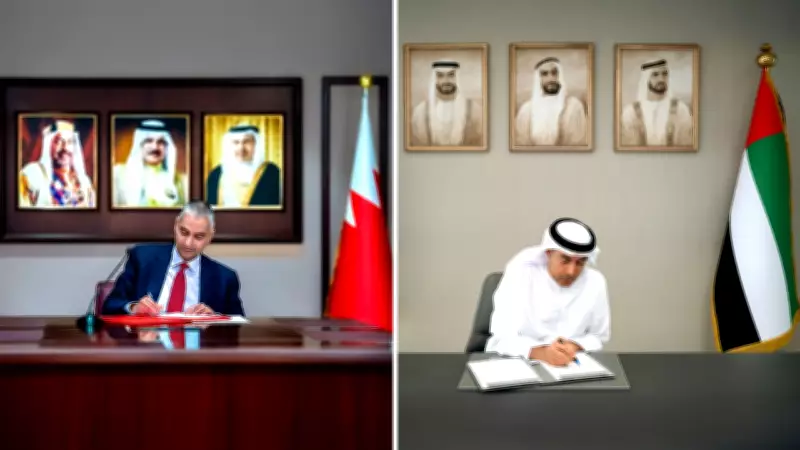
The United Arab Emirates and Bahrain have taken a significant step towards deepening their financial and economic partnership by signing a currency swap agreement valued at AED 20 billion, equivalent to BHD 2 billion. This landmark deal, formalized during a virtual ceremony, underscores a shared commitment to bolstering monetary cooperation and fostering stronger ties between the two Gulf nations.
Details of the Five-Year Agreement
The agreement, which spans a duration of five years, brings together the UAE Dirham (AED) and the Bahraini Dinar (BHD) under a structured framework aimed at enhancing liquidity and facilitating smoother cross-border transactions. It was officially signed by Khaled Mohamed Balama, Governor of the Central Bank of the UAE, and Khalid Humaidan, Governor of the Central Bank of Bahrain. This move is designed to strengthen coordination between the two central banks while actively promoting the use of local currencies in trade and investment activities.
Statements from Central Bank Governors
In his remarks, Khaled Mohamed Balama emphasized that the agreement reflects a mutual dedication to deepening financial and monetary cooperation. He highlighted its role in supporting efforts to expand the use of national currencies in transactions and in building robust frameworks for collaboration between central banks. Balama noted that this initiative is expected to contribute significantly to financial stability and to reinforce both regional and international partnerships.

Khalid Humaidan echoed these sentiments, describing the agreement as a testament to the close relationship between the UAE and Bahrain. He stated that it marks an important step in advancing cooperation between the financial systems of the two countries and supports broader objectives of regional financial integration. Humaidan added that the deal is anticipated to bolster economic growth while reinforcing financial stability in both nations.
Implications and Broader Context
Currency swap agreements, such as this one, enable central banks to exchange currencies, thereby ensuring liquidity and making cross-border trade more efficient. Officials view this development as part of wider efforts to strengthen economic cooperation across the region. The agreement is poised to:
- Enhance financial stability by providing a reliable mechanism for currency exchange.
- Support increased trade and investment flows by reducing dependency on foreign currencies.
- Foster closer ties between the UAE and Bahrain, setting a precedent for future regional collaborations.
This strategic move aligns with ongoing initiatives to promote economic resilience and integration in the Gulf region, highlighting the proactive steps taken by both nations to navigate global economic challenges and capitalize on mutual opportunities.