

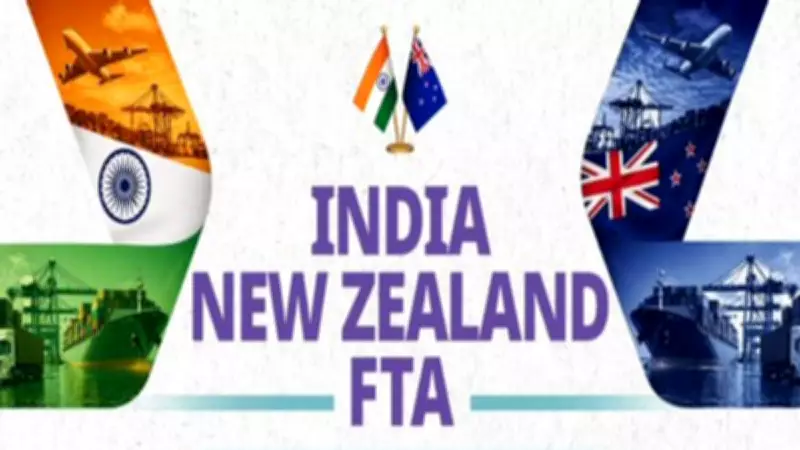
India and New Zealand have signed a landmark free trade agreement (FTA) that provides duty-free access for 100% of India's exports to New Zealand. The pact, finalized after years of negotiations, is expected to significantly boost bilateral trade and strengthen economic ties between the two nations.
Key Highlights of the Agreement
The FTA covers a wide range of goods and services, eliminating tariffs on all Indian products exported to New Zealand. Key sectors benefiting include textiles, pharmaceuticals, agricultural products, and machinery. In return, India will phase out tariffs on 80% of New Zealand's exports over a period of 10 years, with sensitive sectors like dairy and meat protected under safeguard clauses.
Strategic and Economic Implications
This agreement is part of India's broader strategy to deepen economic engagement with the Asia-Pacific region. For New Zealand, it opens up a vast market of over 1.4 billion consumers. Both countries have committed to enhancing cooperation in areas such as digital trade, intellectual property rights, and sustainable development.

The FTA is expected to increase bilateral trade from the current $2.5 billion to $5 billion within five years. Additionally, it will facilitate greater investment flows and job creation in both economies.
Reactions and Next Steps
Indian Prime Minister Narendra Modi hailed the agreement as a "win-win" for both nations, emphasizing its potential to drive growth and prosperity. New Zealand Prime Minister Chris Hipkins called it a "historic moment" that would strengthen the relationship between the two countries.
The agreement will come into effect after ratification by both parliaments, expected within the next six months. Businesses on both sides are already gearing up to leverage the new opportunities.






