

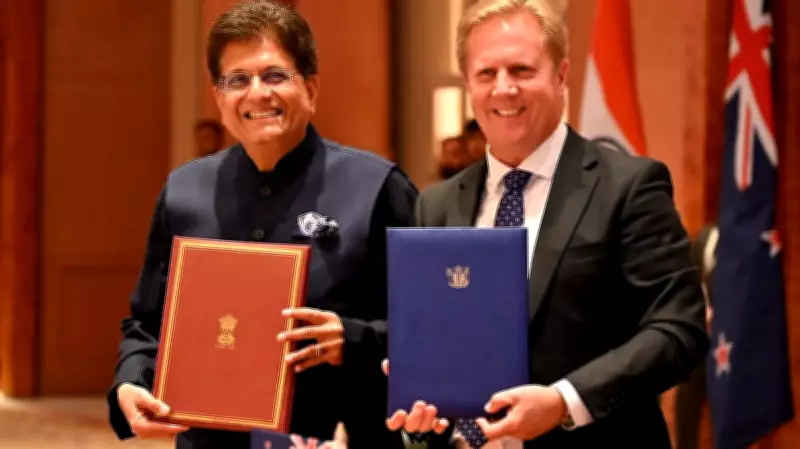
India and New Zealand have signed a comprehensive free trade agreement, aiming to drive $20 billion in bilateral investment. The pact, finalized on April 27, 2026, marks a significant milestone in economic relations between the two nations.
Key Provisions of the Agreement
Under the agreement, India will provide duty elimination on 30 percent of New Zealand's tariff lines. This includes goods such as wood, wool, sheep meat, and leather-raw hides. The move is expected to boost trade and create new opportunities for businesses in both countries.
Investment and Trade Goals
The free trade agreement is designed to stimulate $20 billion in investment over a period. Both nations have committed to reducing trade barriers and enhancing cooperation in sectors like agriculture, technology, and manufacturing. New Zealand exporters will gain preferential access to the Indian market, while Indian businesses will benefit from reduced tariffs on key exports.

Strategic Importance
This agreement strengthens the economic partnership between India and New Zealand, aligning with broader regional trade dynamics. It is expected to foster closer ties and support sustainable growth. The deal also includes provisions for intellectual property rights, services trade, and dispute resolution mechanisms.
Industry leaders have welcomed the pact, highlighting its potential to unlock new markets and drive innovation. Both governments are optimistic about the long-term benefits, including job creation and enhanced competitiveness.






