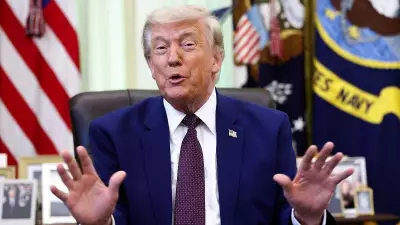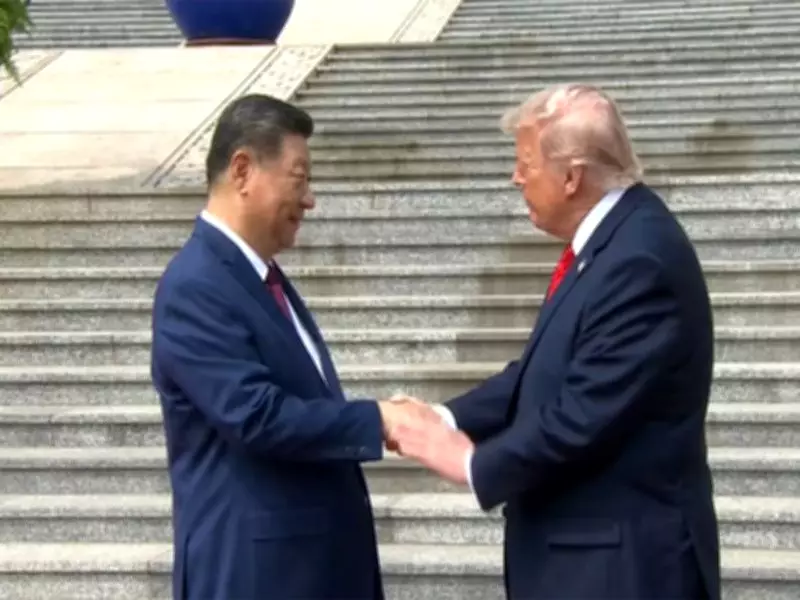
As US President Donald Trump and Chinese President Xi Jinping prepare for bilateral talks, strategic supply chains—from semiconductors to rare earths—are expected to dominate the agenda. The discussions come amid heightened tensions over technology and trade, with both nations seeking to secure critical resources and manufacturing capabilities.
Semiconductors at the Core
Semiconductors have emerged as a key battleground in the US-China rivalry. The US has imposed export controls on advanced chips and chipmaking equipment, aiming to curb China's technological rise. In response, China has accelerated its push for self-reliance, investing heavily in domestic chip production. The talks are likely to address these tensions, though a breakthrough remains uncertain.
Rare Earths and Critical Minerals
Rare earth elements, essential for electronics, defense systems, and green energy, are another flashpoint. China dominates the global supply chain, controlling over 60% of mining and 90% of processing. The US has been seeking to diversify its sources, including through partnerships with Australia and Canada. The leaders may discuss cooperation or competition in this sector.

Beyond semiconductors and rare earths, the talks will cover broader supply chain security, including issues like lithium for batteries, pharmaceuticals, and critical minerals. Both countries have implemented policies to reduce dependence on each other, but the economic interdependence makes a full decoupling costly.
Strategic Implications
The outcome of the Trump-Xi meeting could set the tone for global trade and technology policies. Analysts expect the discussions to be tough, with each side pressing its strategic interests. While some cooperation may be possible, the underlying competition is likely to persist, shaping supply chains for years to come.
Industry observers will be watching for any announcements on joint initiatives or de-escalation measures. However, given the deep-seated rivalry, a comprehensive agreement seems unlikely. Instead, the talks may focus on managing tensions and avoiding a full-blown trade war that could disrupt global markets.