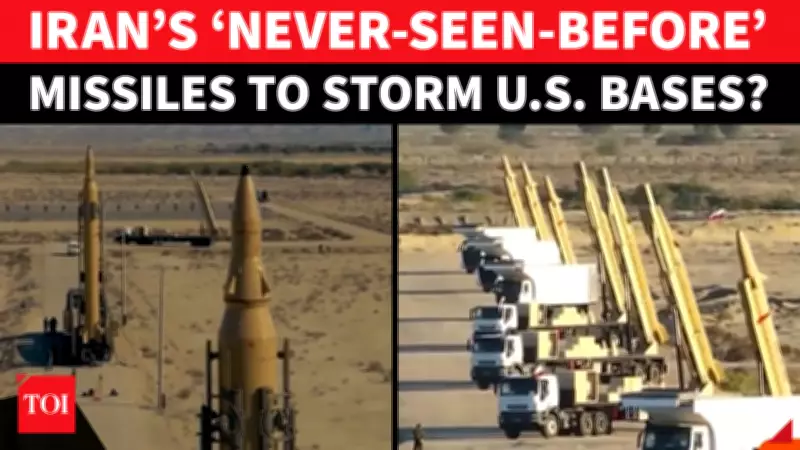
Fresh fears of a new Middle East escalation are emerging after an Iranian military source claimed Tehran possesses advanced domestically produced weapons that have never been used in combat. Speaking to Russian state-owned outlet RIA Novosti, the source warned that Iran is fully prepared to respond to any future attack by the United States or Israel — and said Tehran would no longer act with restraint.
The source claimed Iran faces “no shortages” in military equipment or defense capabilities and hinted that undisclosed weapons systems could be deployed in a future conflict. The remarks come amid continuing tensions following Operation Epic Fury and growing concerns over Iran’s missile, drone, and nuclear capabilities.
Background of Tensions
The Middle East has been on edge since the recent Operation Epic Fury, which involved strikes attributed to US and Israeli forces. Iran has consistently warned of retaliation, and this latest statement suggests a shift in strategy—from restraint to potential full-scale response.

Iran's Military Posture
Iranian military officials have emphasized self-sufficiency in arms production. The claim of “hidden missiles” indicates that Tehran may have weaponry that has not been revealed to the public or used in past conflicts. This could include advanced ballistic missiles, cruise missiles, or drone technology.
Experts speculate that Iran’s missile program is among the most sophisticated in the region, with a range capable of reaching Israel and US bases in the Gulf. The possibility of new, untested weapons raises the stakes for any future confrontation.
International Reactions
The United States and Israel have not officially responded to the latest claims. However, both nations have maintained a policy of deterrence against Iran’s nuclear ambitions and regional activities. The Russian outlet’s interview with the Iranian source may be seen as an attempt to signal strength to adversaries.
Meanwhile, Gulf states and European powers have called for de-escalation. The United Nations has urged restraint, warning that a full-scale conflict could destabilize the entire region.
Potential Scenarios
If the US or Israel were to strike again, Iran’s response could involve direct attacks on military targets, proxy forces in Syria and Yemen, or cyber operations. The mention of “beyond imagination” weapons suggests a desire to create uncertainty and deterrence.
Analysts caution that while Iran’s rhetoric is often bellicose, its actual military decisions are calculated. The country has avoided direct confrontation with major powers in recent years, preferring asymmetric warfare.
Nevertheless, the current standoff remains volatile. With diplomacy stalled and sanctions in place, the risk of miscalculation is high. The world watches as Iran dares its adversaries to test its hidden arsenal.