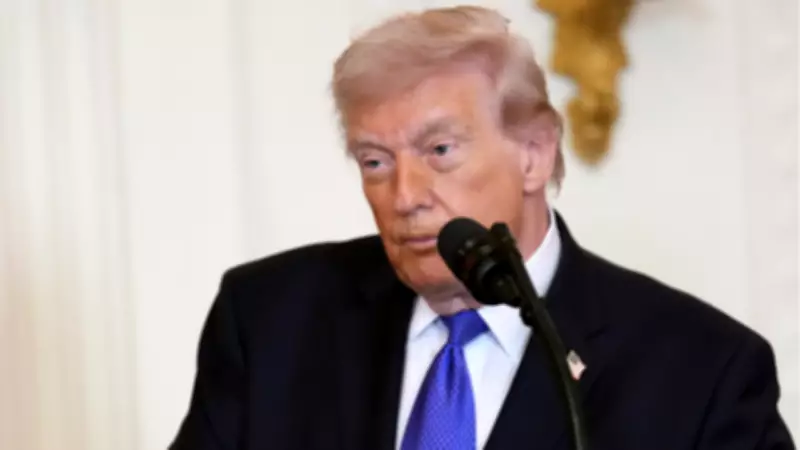
Iran's Revolutionary Guard Taunts Trump with Signature 'You're Fired' Line
In a sharp escalation of Middle East tensions, Iran's Islamic Revolutionary Guard Corps (IRGC) has launched a verbal broadside against former US President Donald Trump, mockingly using his iconic catchphrase "You're fired" in response to his recent ultimatum. The provocative remark came from an IRGC spokesperson following Trump's 48-hour deadline demanding Iran fully reopen the strategically vital Strait of Hormuz or face American strikes on Iranian power infrastructure.
The Ultimatum and Mocking Response
The spokesperson delivered the pointed jab with clear reference to Trump's television persona, stating: "Hey, Trump, you're fired. You are familiar with this sentence. Thank you for your attention to this matter." The closing line appeared deliberately crafted to mimic Trump's characteristic social media tone, adding another layer of psychological warfare to the already volatile situation. This exchange comes after Trump warned that the United States would "hit and obliterate" Iran's power plants if Tehran failed to comply with the ultimatum, a threat targeting critical civilian infrastructure that could have devastating humanitarian consequences.
Iran's Retaliatory Threats and Regional Implications
Iran responded with sweeping counter-threats that could destabilize the entire Gulf region. Military spokesman Ebrahim Zolfaqari declared that if Iran's energy network comes under attack, Tehran will retaliate against US-linked assets throughout the Gulf area. "If Iran's fuel and energy infrastructure is attacked by the enemy, all energy infrastructure, as well as information technology...and water desalination facilities, belonging to the US and the regime in the region will be targeted pursuant to previous warnings," Zolfaqari stated with ominous clarity.

Iranian parliament speaker Mohammad Baqer Qalibaf reinforced this warning, suggesting that key infrastructure across the Middle East could face "irreversible destruction" if Iranian power plants are struck. These threats highlight how quickly a bilateral confrontation could spiral into regional catastrophe affecting multiple nations and global energy supplies.
The Strategic Heart of the Conflict: Strait of Hormuz
At the core of this dangerous standoff lies the Strait of Hormuz, a narrow but critically important shipping chokepoint through which approximately one-fifth of global oil and liquefied natural gas normally flows. Iran has already moved to effectively shut down this vital waterway amid the ongoing conflict, creating the most severe energy disruption since the oil crises of the 1970s.
The IRGC has warned that the strait will remain completely closed until damaged Iranian infrastructure is fully rebuilt, stating unequivocally: "The Strait of Hormuz will be completely closed and will not be opened until our destroyed power plants are rebuilt." This blockade has already sent shockwaves through global markets, with oil prices climbing steadily and European gas prices experiencing sharp surges in recent trading sessions.
Broader Conflict Context and Humanitarian Toll
The current conflict, initiated by the United States and Israel on February 28, has now extended beyond three weeks with devastating human consequences. Reports indicate that more than 2,000 people have been killed in the fighting, though exact casualty figures remain difficult to verify amid the chaos. The situation represents one of the most dangerous confrontations in the region in recent years, with potential ramifications for global energy security, international diplomacy, and regional stability.
As diplomatic channels appear strained and military posturing intensifies, the world watches anxiously to see whether this war of words will escalate into broader military action with unpredictable consequences for the Middle East and beyond.