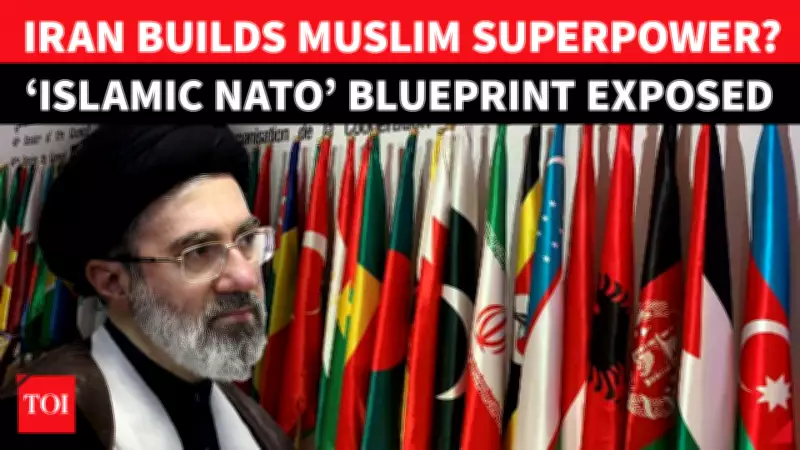
Iran has proposed the formation of an Islamic military and economic alliance similar to NATO, aiming to counter future aggression from Western powers. The proposal was made by Admiral Ali Akbar Ahmadian amid a US naval blockade, presenting what he describes as an ambitious geopolitical vision.
Details of the Proposal
Admiral Ahmadian formally suggested creating a unified bloc of Muslim-majority nations that would pool their wealth and take control of critical maritime chokepoints, such as the Strait of Hormuz and the Bab el-Mandeb. He argued that such a bloc would become the largest economic force on earth, capable of ending Western bullying without the need for nuclear weapons.
Key Strategic Points
- The proposed alliance would focus on military cooperation and economic integration among member states.
- Control over vital shipping routes would give the bloc significant leverage over global trade.
- Ahmadian emphasized that this initiative could deter Western powers without escalating to nuclear confrontation.
The proposal comes at a time of heightened tensions between Iran and the United States, with the US imposing a naval blockade that has severely impacted Iran's economy. The idea of an Islamic NATO is seen as a response to what Iran perceives as Western aggression and a way to assert regional dominance.

Reactions and Implications
The proposal has generated mixed reactions internationally. Some analysts view it as a strategic move to rally Muslim-majority nations against Western influence, while others question the feasibility of uniting countries with diverse political and economic interests. The success of such an alliance would depend on overcoming historical rivalries and achieving consensus on shared goals.
Iran's call for an Islamic NATO underscores its desire to reshape the global order and reduce dependence on Western alliances. It remains to be seen whether other nations will support this vision or if it will remain a rhetorical gesture amid ongoing geopolitical tensions.