

A familiar, grim rhythm has long defined public dissent in Iran: protests rise, they spread, and they are systematically crushed by the state. However, the latest nationwide demonstrations that erupted in late December 2025 are unsettling observers not merely due to their scale, but because they suggest this old pattern may be breaking down. This is not just another chapter in the Islamic Republic's cycle of unrest; it is a revolt born from a total economic breakdown that has pushed once-cautious segments of society into open rebellion.
The Spark: A Currency in Freefall and Daily Life Paralyzed
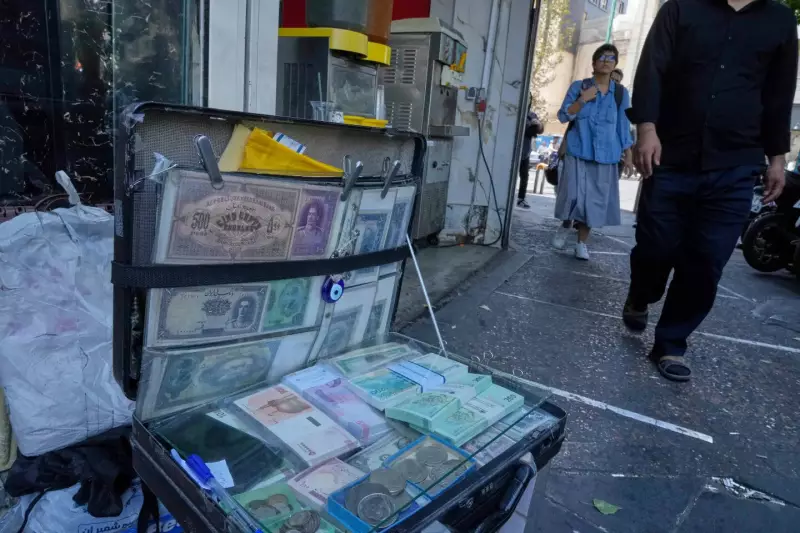
The immediate trigger was a catastrophic collapse in economic credibility. The Iranian rial plunged to a historic low of roughly 1.4 million per US dollar. This currency crisis coincided with inflation soaring past 50%, food prices skyrocketing more than 70% year-on-year, and wages evaporating in value almost overnight. Unlike previous uprisings that often began on university campuses or around social issues, these protests ignited in Tehran's Grand Bazaar—the symbolic and practical heart of Iran's economy—before spreading rapidly to all 31 provinces of the country.
This uprising strikes directly at the economic foundations of public consent, challenging more than just the regime's ideological legitimacy. While Iran's leadership has survived past shocks—from the 2009 Green Movement to the 2019 fuel protests and the 2022–23 "Woman, Life, Freedom" uprising—through a mix of repression and selective concessions, analysts argue those tools are most effective when the economy, however battered, still functions. This time, as noted by publications like Foreign Policy and the Economist, money itself has stopped making sense.

When shopkeepers cannot price goods, importers cannot plan, and wages become meaningless before payday, the state loses its fundamental ability to arbitrate daily life. "The collapse is not just of the rial, but of trust," Alex Vatanka of the Middle East Institute told Reuters. In Iran's political history, that erosion of trust represents an exceptionally dangerous position for any government.
What Makes These Protests Different: A Broader Coalition, Sharper Demands
Several key factors distinguish the 2025-26 protest wave from its predecessors. First, the trigger is systemic economic paralysis, not a single moral outrage. While the 2022 protests following Mahsa Amini's death centered on dignity and generational rebellion, the current unrest erupted because commerce itself broke down. As The Times of Israel bluntly stated, Iranians revolted when they realized that "money no longer works." Economic paralysis, unlike moral outrage, cannot be compartmentalized or delayed.
Second, the social coalition mobilized is broader and formed earlier. According to Foreign Policy, the protests have quickly drawn in bazaar merchants, students, urban professionals, laborers, women, and ethnic minorities. In 2022, demonstrations initially clustered in major cities among the youth. This time, smaller towns and economically marginalized regions joined almost immediately, reflecting how deeply inflation and currency collapse have penetrated every layer of Iranian society.
Third, the political center of gravity has shifted markedly toward demands for regime change. While the "Woman, Life, Freedom" slogan remains powerful, chants documented by Reuters and AP across Tehran, Isfahan, and Mashhad increasingly call for the end of the Islamic Republic itself. Protesters have been heard praising the former monarchy and calling for the return of Crown Prince Reza Pahlavi—rhetoric that would have guaranteed swift execution in the past. This shift signals a profound exhaustion with the very idea of reform within the existing system.
A Weakened Regime Faces a Perfect Storm
This protest wave unfolds as Iran's external position is arguably weaker than at any point in decades. In 2022, Tehran could still point to its regional influence and nuclear program as buffers against internal dissent. By late 2025, those buffers have eroded. Bashar al-Assad is no longer in power in Syria, Israeli and US strikes have damaged Iran's nuclear infrastructure, and its proxies from Gaza to Lebanon have been degraded.

At home, the regime's time-tested formula of repression paired with tactical concessions is losing traction. Analysts cited by Reuters note that crackdowns still instill fear but no longer restore confidence. Cosmetic changes, like reshuffling economic officials, ring hollow to a population that understands where real power lies. The Economist observed that what sets this moment apart is that "the bankruptcy of the regime (both literal and figurative) is in full view."
Adding to the uncertainty is unprecedented talk of possible foreign intervention. After the US raid to seize Nicolás Maduro from Venezuela on January 3rd, 2026, many Iranians wondered if their country might be next. US President Donald Trump warned that if Iranian authorities "start killing people," Washington would respond forcefully. Israeli Prime Minister Benjamin Netanyahu commended the demonstrations, calling them a decisive moment. Iranian officials cite these statements as evidence of foreign interference, even as everyday citizens struggle to buy food.
The Road Ahead: Between Collapse and Catastrophe
In the short term, Tehran is likely to intensify repression. However, these protests are fundamentally different because they are rooted in an economic collapse for which the regime has no credible solution. The opposition, while broader, remains fragmented. The security forces, though armed, face questions about their unity if central authority weakens, as analyst Michael Rubin of the Middle East Forum has highlighted.
History offers little comfort. Illegitimate regimes do not always fall, and when they do, they rarely fall cleanly. Iran now sits uncomfortably between the survival of a "zombie state" like North Korea and a catastrophic collapse like Syria's. As one analyst quoted by Reuters summarized, "Change now looks inevitable; regime collapse is possible but not guaranteed." The protests have shattered what remained of the regime's moral and economic credibility, setting the stage for a period of profound and dangerous uncertainty.





